Two weeks in Japan by train: Tokyo to Hiroshima
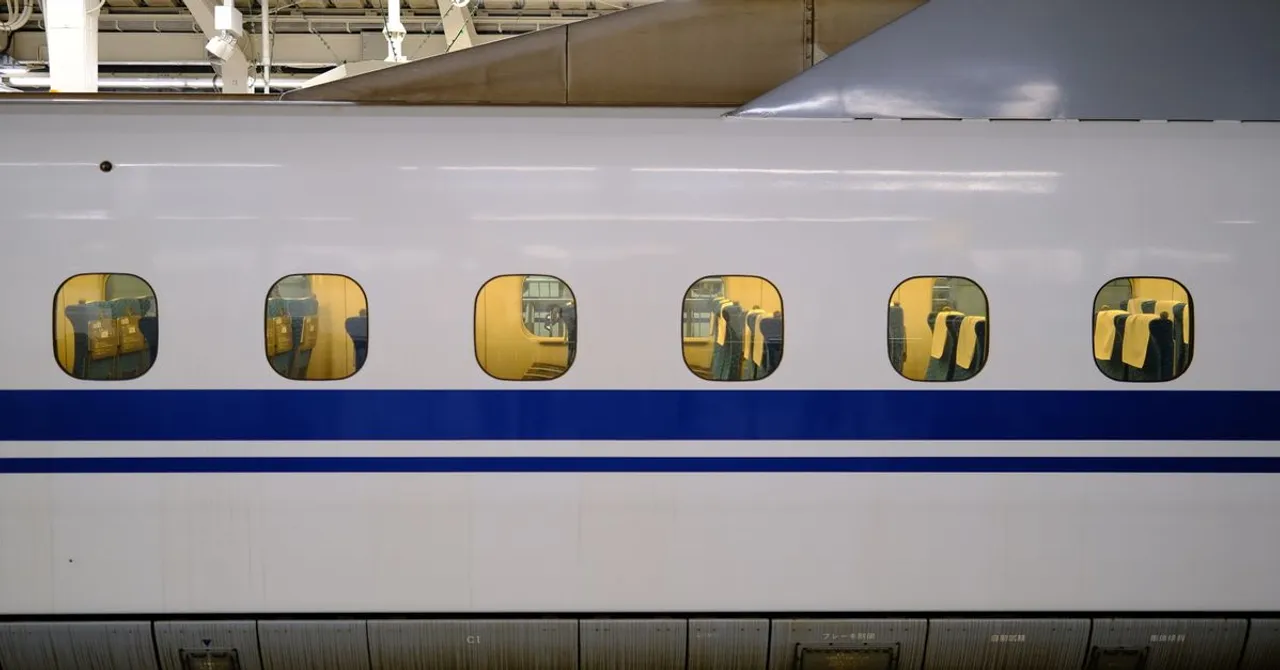
Fourteen nights across four cities, all linked by shinkansen, and all covered by a single Japan eSIM you install before you fly. Budget roughly 500 MB to 1 GB a day for maps, translation and train apps, so 10 GB comfortably covers two weeks without renting a pocket wifi at the airport.
Contents
Most first trips to Japan run Tokyo to Kyoto to Osaka and back, which is a fine week but a slightly thin fortnight. Swapping Osaka for Kanazawa on the way west and finishing in Hiroshima gives you the same famous cities plus a coastal detour through the Hokuriku region, and it still never asks you to double back on yourself.
The route, leg by leg
Fourteen nights split across four bases, with no day lost entirely to travel. The longest leg is three hours and the shortest is well under two, so every transfer day still leaves an afternoon. Times are approximate and worth rechecking when you book, since seasonal timetables move.
| Leg | Train | Time | Nights |
|---|---|---|---|
| Tokyo | Arrive by air | - | 4 |
| Tokyo to Kanazawa | Hokuriku Shinkansen, Kagayaki or Hakutaka | About 2h30 to 3h | 2 |
| Kanazawa to Kyoto | Hokuriku Shinkansen to Tsuruga, then Thunderbird | About 2h | 5 |
| Kyoto to Hiroshima | Sanyo Shinkansen, Nozomi or Hikari | About 1h40 to 2h | 3 |
Run it in reverse if flying home from Tokyo is cheaper. Nothing about the connectivity advice below changes with direction.
Tokyo, four nights
Four nights is the minimum that lets Tokyo stop feeling like a transit hall. It is less a city than a chain of centres, and the useful mental model is to pick one or two per day rather than trying to string them together: Shibuya and Shinjuku in the west, Ueno and Asakusa in the northeast, Ginza and the bay in the south.
You will be on the metro constantly, and this is the first place the data budget matters. Route-finding apps are what make Tokyo's network legible to a visitor, and they are useless offline: platform numbers, exit letters and live delays are all fetched. An IC card in your phone's wallet handles the fares themselves.
Tokyo to Kanazawa
One direct train, no changes. The Hokuriku Shinkansen runs from Tokyo Station up over the mountains and down to the Sea of Japan coast. Kagayaki services are the fast ones at around two and a half hours and are entirely reserved, so you book a seat rather than turning up; Hakutaka services stop more often and take closer to three hours, and carry unreserved cars.
Kanazawa, two nights
Kanazawa is the reason to take this route rather than the standard one. It kept its Edo-period districts largely intact, so the samurai and geisha quarters are real streets rather than reconstructions, and Kenrokuen is on every list of the finest gardens in the country. Two nights is enough for the garden, the castle grounds, one teahouse district and the market.
Kanazawa to Kyoto
This is the leg most itineraries still describe wrongly. Until March 2024 the Thunderbird limited express ran all the way from Kanazawa to Kyoto in one go. When the Hokuriku Shinkansen was extended west to Tsuruga, that through service ended: you now take the shinkansen from Kanazawa to Tsuruga, then change to a Thunderbird for the run down to Kyoto. The connection is timed and the total is still around two hours, but it is a change, not a straight-through ride.
If a guide or a blog post tells you to board a direct Thunderbird at Kanazawa for Kyoto, it was written before March 2024. Book the leg as two trains with a transfer at Tsuruga and the timetable will make sense.
Kyoto, five nights
Five nights sounds generous until you arrive. Kyoto's sights are spread around the edges of a flat basin, and the travel between them eats more of the day than the map suggests. Five nights lets you take the east and the west on separate days, keep one day for the far north, and still have a day that is not a checklist.
Nara is the day trip worth a separate ticket. It is well under an hour from Kyoto, and the temple park is on a scale nothing in Kyoto matches. Go early: the deer are everywhere, and so is everyone else by mid-morning.
Kyoto to Hiroshima
Back on the shinkansen, heading west along the Sanyo line. Nozomi services are the fastest at a little over an hour and a half. Hikari services take closer to two hours and matter for a specific reason covered below: they are the ones a rail pass actually includes.
Hiroshima, three nights
Two nights is enough for the Peace Memorial Park and the museum, which most people want to give a full unhurried day rather than an afternoon. The third night is for Miyajima, and it is the one people cut and then regret: the island is a short train and ferry hop, and staying until the day-trip crowds leave is the entire point.
The rail pass question
There is no single answer, and anyone who gives you one is guessing. A nationwide pass is priced against a lot of long-distance travel, and this route is four cities in fourteen nights rather than a sprint up and down the country. Price your actual legs against the pass before you buy rather than assuming either way.
One rule does hold whichever way you go. The nationwide pass does not cover Nozomi or Mizuho services on the Tokaido and Sanyo lines, which are exactly the fast trains you would otherwise reach for on the Kyoto to Hiroshima leg. You either take a Hikari and accept the extra twenty minutes, or buy the separate supplement ticket that JR sells for pass holders. The official rules are here.
Regional passes are the ones worth pricing on this route. The nationwide pass is built for people crossing the whole country, and four cities in two weeks is not that trip.
How much data two weeks in Japan needs
Japan is unusual in how much of the trip runs through your phone. Route-finding for the rail network, translation for menus and signage, and ticket or IC card apps are all live services, and they are the difference between the country being easy and being work. That pushes daily use higher than a beach holiday and lower than a video-heavy one.
| What you are doing | Rough daily use |
|---|---|
| Maps and rail routing | 150 to 300 MB |
| Translation, camera and text | 50 to 150 MB |
| Messaging and photo sharing | 100 to 250 MB |
| Browsing, bookings and tickets | 100 to 200 MB |
| Occasional video on a long leg | 300 MB and up per hour |
That lands most people between 500 MB and 1 GB a day, so 10 GB covers the fortnight with room to spare. Push to 20 GB if you plan to work, stream on the shinkansen, or tether a laptop.
Coverage is not the thing to worry about. Japanese networks are dense and fast even well outside the cities, and the Hokuriku coast and the Miyajima ferry are no exception. Long shinkansen tunnels are the one place a connection drops, which is an argument for downloading offline maps for the day rather than for buying more data.
The one habit worth breaking is the airport pocket wifi rental. It is a second device to charge, collect and return on a schedule, it covers one bag rather than one person, and an eSIM does the same job with nothing to hand back. Install it before you fly and you are connected while you are still walking to immigration. If you want the full data maths, we go deeper in how much data you really need in Japan.
Before you fly
- Install the eSIM at home, on wifi. It takes a few minutes and needs a connection you will not have on arrival.
- Add an IC card to your phone wallet before you land, so the first metro ride is not a ticket-machine queue.
- Download offline maps for each city. Tunnels and basements are where a live map fails, not the countryside.
- Book the Kagayaki and any Nozomi seat in advance. Reserved-only services do not have an unreserved car to fall back on.
- Check the Miyajima tide table before you pick which day to go.
Can I do this route in ten days instead of fourteen?
Yes, by cutting Kanazawa and taking one night off Kyoto and Hiroshima. That gives you Tokyo, Kyoto and Hiroshima in ten nights, which is the standard first-trip shape. Kanazawa is the first thing to go because it is the only stop that is a detour rather than a step west.
Do I need a rail pass for this itinerary?
Not necessarily. Four cities over fourteen nights is a small number of long journeys, which is the case where individual tickets often win. Price your four legs against a pass before deciding, and look at the regional passes rather than only the nationwide one.
Is there still a direct train from Kanazawa to Kyoto?
No. Since March 2024 the Hokuriku Shinkansen runs as far as Tsuruga, and the Thunderbird limited express now works the Tsuruga to Kyoto and Osaka section. You change at Tsuruga. The total journey is still around two hours.
Will one eSIM cover the whole route?
Yes. This route stays inside Japan, so a single Japan plan covers all four cities and everything in between. There is no border to plan around and nothing to switch when you change city.
Should I rent a pocket wifi at the airport instead?
For one or two people, an eSIM is simpler. There is no device to collect or return, nothing extra to charge, and it works from the moment you land rather than from the moment you find the rental counter. Pocket wifi makes more sense for a group sharing one connection.
Popular Japan eSIM plans
Tap a size to see live Japan prices and buy in a couple of taps.