Why your travel data credit should never expire

Most travel plans expire on a validity window, so unused gigabytes are money spent on nothing. A pay as you go balance has no window: credit you load is yours until it's spent, carries between countries and trips, and picks up exactly where it left off the next time you land.
Contents
There's a quiet tax on cautious travelers. Afraid of running out mid-trip, you buy the bigger plan, and you were right to worry about the wrong thing: most people come home with gigabytes unused, and the moment the validity window closes, that leftover data stops existing. Buy 10 GB, use 4, and nobody refunds the other 6. Here's why plans work that way, and what changes when your travel data is a balance with no clock on it.
Why plans expire at all
Validity windows aren't a scam; they're the mechanism that makes bucket pricing possible. A plan is cheap per gigabyte precisely because it's bounded: a fixed amount, in a fixed place, for a fixed time. The provider can price it aggressively because unused capacity expires instead of accumulating as an open-ended debt. The system is fine when your usage matches the bucket. The cost lands on everyone who buys big "just in case", which, if the fear of running out drives your choices, is you on every single trip.
What a balance with no clock changes
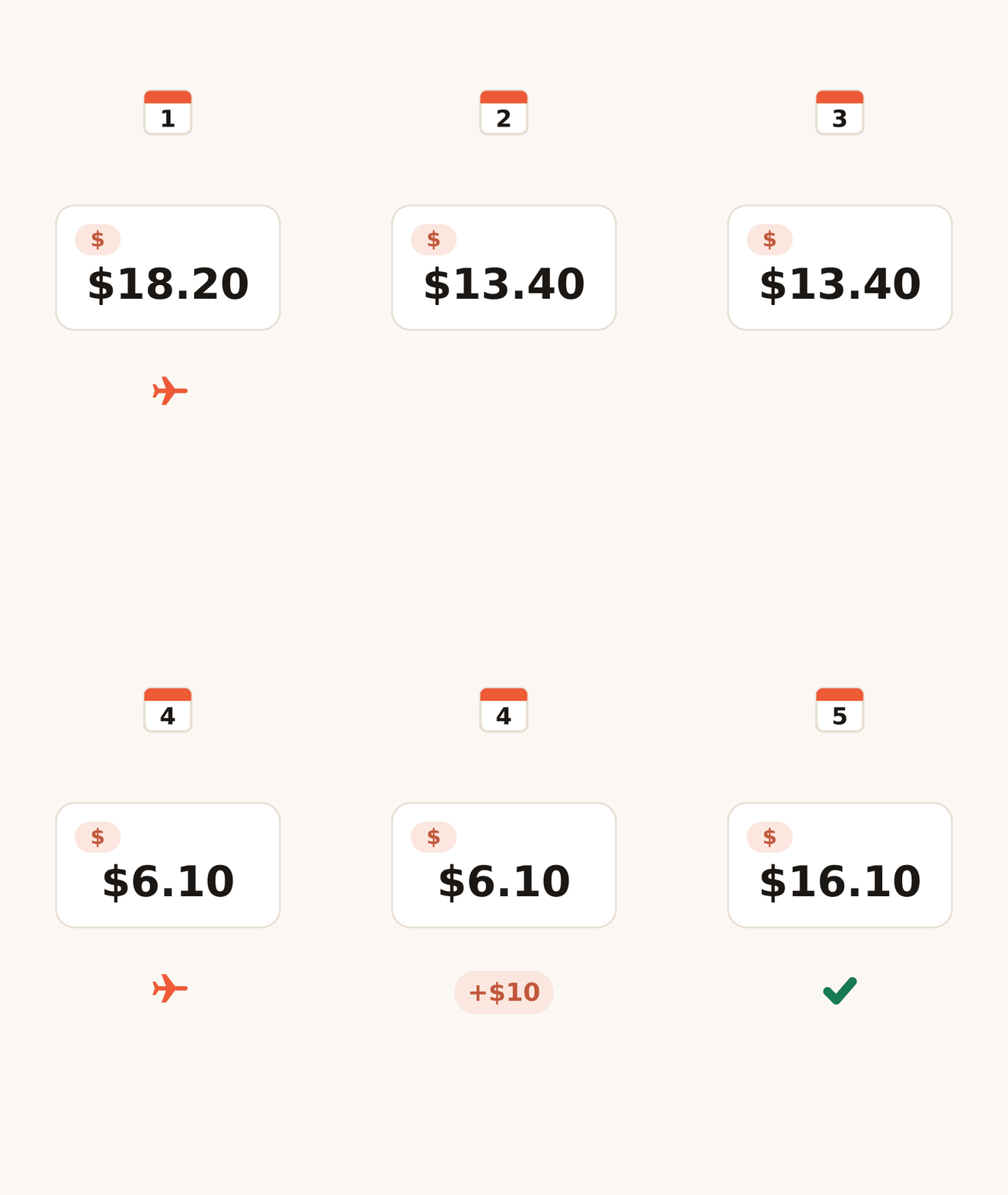
With pay as you go, you load credit in dollars and data comes off it by the megabyte at each country's published rate. Come home with $6.40 left and nothing happens: the balance sits in your account and works again the next time you land somewhere, next month or next year. Nothing to re-buy, nothing to reinstall, no window to outrun. The deeper change is behavioral: overbuying stops being insurance. You don't need the big bucket "just in case" when running low simply means topping up in seconds, so you can start at $10 and let actual usage, not fear, decide what you spend.
No expiry doesn't mean no control
A balance without a deadline still has guardrails. Every country's rates are published before you travel, every network included, so you can see the whole range before you commit rather than after. We warn you when credit runs low, first around $5 and again around $1, and when the balance hits zero, data stops rather than billing onward, so there is nothing open-ended to be surprised by. Optional automatic top-up can reload the balance when it runs low, capped at a limit you choose and easy to switch off. Prefer to watch it yourself? Checking your usage works the same as on any plan.
Who gets the most out of it
- Frequent short-trip travelers: the balance becomes a standing travel line that's simply always there, trip after trip.
- Once-a-year vacationers who hate waste: whatever this year's trip doesn't use, next year's trip will.
- Border-hoppers: leftover credit isn't stranded in the country you bought it for, because it was never tied to a country at all.
- Anyone who overbuys out of caution: start small, top up only if the trip actually demands it.
If your trips are heavy and predictable, a fixed bucket is still the cheaper buy per gigabyte, expiry and all. But if you've ever come home resenting the gigabytes you paid for and never touched, that resentment was pointing at the real problem: not how much data you bought, but the deadline attached to it.
Does the credit really never expire?
Really. The balance has no validity window and no expiry date. It carries between countries and between trips, and it's still there whenever you next need it.
Is there a minimum or maximum top-up?
Top-ups start at $10 and go up to $100 each, in preset steps. Your running balance can grow beyond a single top-up; only each individual purchase is capped.
What if rates change between my trips?
Rates can change over time, but every country's current rate is published in the rate card and in your account, so you can check what data will cost before you fly. The published rate is a ceiling, never a floor.
Can I still buy a fixed plan for a big trip?
Of course. Plans and pay as you go live side by side, and many travelers use a bucket for a heavy trip while the balance covers everything in between.
What happens when my balance hits zero?
Data stops, cleanly. No overage, no bill. Top up and the connection comes straight back, or turn on capped automatic top-up so it never gets there.