Fixed plan or pay as you go: which travel eSIM saves you money?

If you know roughly how much data you'll use, a fixed bucket wins: per gigabyte it costs about a third of the metered rate. Pay as you go wins when usage is light or unpredictable, or when a trip crosses several borders: you pay only for what you use, and unused credit never expires.
Contents
We sell fixed plans, unlimited plans and pay as you go credit side by side, and we'd rather you picked the right one than the biggest one. The two models charge in fundamentally different ways, and each is cheapest for a different kind of trip. Here's the honest math.
How each one charges
A fixed plan is a bucket: a set number of gigabytes, in one country or region, valid for a set number of days. You pay once, up front, and the price per gigabyte is low because you've committed to a number. Whatever you don't use expires with the plan. Pay as you go is a prepaid balance: data comes off it by the megabyte at each country's published rate, in 180+ countries, and the balance never expires. You commit to nothing, and you pay for exactly what you use, at a higher rate per gigabyte.
The per-gigabyte math
Per gigabyte, metered credit typically costs around three times the cheapest fixed bucket for the same country. That sounds like a bad deal until you remember what a bucket really is: a bet on your own usage. Use half of a 10 GB plan and your effective price per gigabyte just doubled. Use a fifth of it and the metered rate would have been cheaper after all. The bucket's low rate is only real if you genuinely use the bucket.
| Your trip | Better fit |
|---|---|
| Weekend city break, maps and messaging | Pay as you go |
| Two weeks in one country, streaming and hotspot | Fixed or unlimited plan |
| Rail trip through four or five countries | Pay as you go |
| One country, and you know you'll use 10 GB | Fixed plan |
| Frequent short business hops | Pay as you go |
| A month somewhere with nightly video calls | Fixed or unlimited plan |
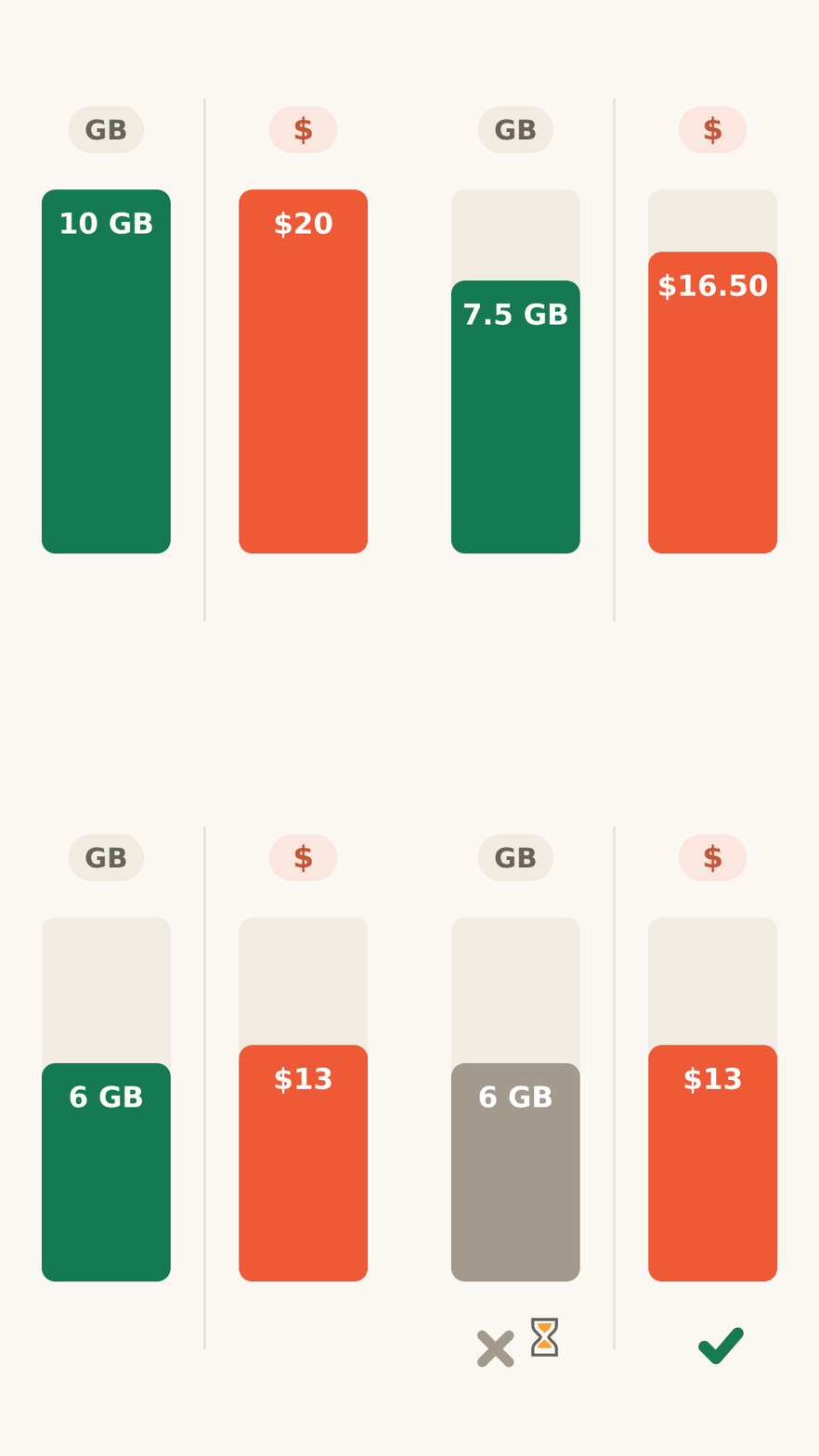
Where the break-even sits
The more confident you are in a number, the more a bucket pays. As a rule of thumb: if you can name a country and honestly expect to use a few gigabytes or more there, buy the bucket for that country. If your answer is "I'm not sure" or "a little, in lots of places", metering will usually come out ahead, because most travel days use far less data than people think. Border-hopping shifts the math further: every extra country either means another bucket or a regional plan sized for the whole trip, while one balance just keeps working at each country's local rate.
The honest version: heavy, predictable, single-country usage is cheaper on a plan, and we'll say so. Pay as you go exists for the trips plans fit badly: the light, the short, the multi-country and the unpredictable.
You don't have to pick a side forever
The two models combine well. Plenty of travelers hold a small pay as you go balance as their standing travel line, and buy a bucket on top for the occasional heavy trip: the plan carries the streaming fortnight in one country, and the balance covers the weekend hops, the layovers and the countries the plan doesn't reach. Since credit never expires, the balance waits patiently between trips.
Is pay as you go cheaper than a fixed plan?
Per gigabyte, no: metered credit costs roughly three times the cheapest bucket rate. Per trip, often yes: light or unpredictable usage means most of a bucket goes unused, while metering only charges for what you actually consume.
What happens to unused data on a fixed plan?
It expires when the plan's validity ends. That is the real cost of over-sizing a bucket, and it's why unpredictable trips favor a balance that carries over instead.
Which is better for visiting several countries?
Usually pay as you go. One balance works across 180+ countries at each country's own rate, while buckets are bought per country or per region. The exception is a regional plan that genuinely matches your route and usage.
Can I use both at once?
Yes. A common pattern is a fixed plan for a heavy leg of a trip and a pay as you go balance for everything around it. Both live on the same phone, and you choose which line carries your data.
What about streaming and hotspot use?
That is bucket territory. Video and tethering run a metered balance down fast, and per gigabyte a big fixed or unlimited plan is much cheaper for it.


