Best eSIM for Angola: coverage from Luanda to the Namib coast
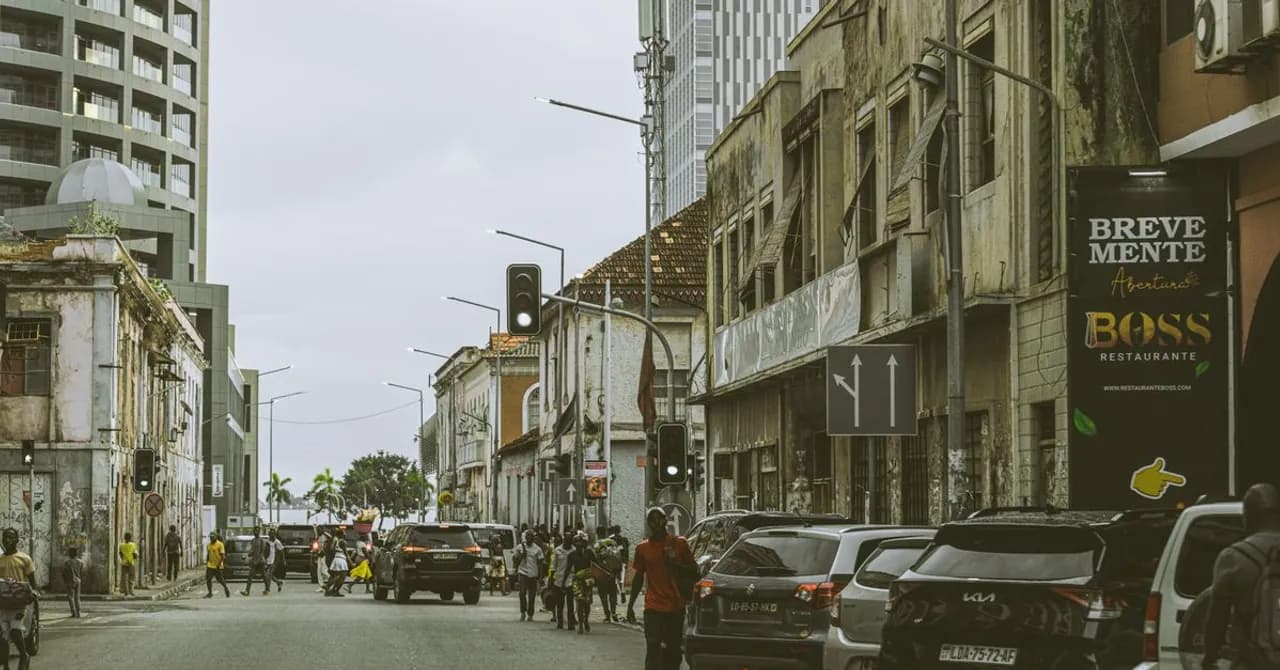
Two operators carry almost the whole trip: Unitel, the largest, with 4G across cities, provincial capitals and main highway corridors, and Africell, newer and concentrated in Luanda and the Benguela-Lobito corridor. Off those routes, expect 3G or nothing. Budget 2–3 GB for a Luanda stay, 4–6 GB with Kalandula or the coast, 8 GB+ if you tether.
Contents
Angola is having a moment as more than an oil-and-diamonds story on a map. Luanda's rebuilt Marginal waterfront draws a growing restaurant and nightlife scene, Kalandula Falls and the Namib-fringed south have climbed onto more itineraries, and colonial-era Benguela and Lobito keep their own quiet pull along the Atlantic. It's also a big country, more than twice the size of France, so one trip can mean a capital-city stay, a long drive to a waterfall, and a coastal desert detour that all need a signal along the way. One eSIM plan covers you across all of it, riding the same partner network a local SIM would use.
Why a travel eSIM is the best option for Angola
Roam on your home plan, buy a local SIM, or install a travel eSIM before you go. Roaming from most home countries is by far the priciest of the three. A local SIM from Unitel or Africell means finding a shop once you land, showing a passport for the mandatory registration, and swapping it into a phone that has to be carrier-unlocked to accept it. A travel eSIM installs from home over Wi-Fi, keeps your own number live alongside it, and connects to the same partner network the moment you land, no queue, no paperwork. Weighing it up? See eSIM vs local SIM vs roaming or compare the real costs.
Unitel and Africell: Angola's two networks
Two operators cover almost anywhere you'll travel, both licensed and regulated by INACOM, Angola's national communications authority. Unitel is the long-standing incumbent and by far the largest, with 4G reaching the country's cities, provincial capitals and the main highway corridors, thinning to 3G or nothing once you're well off the beaten path. Africell is the newer challenger, having rebuilt its Angolan network since 2022 around 5G-ready infrastructure concentrated in Luanda and the Benguela-Lobito corridor, where its own service pages describe high-speed data "up to 5G" in areas it covers. Your travel eSIM's partner network draws on this same underlying infrastructure, so you connect to whichever operator actually reaches where you're standing rather than betting on one brand nationwide.
What actually eats your data here
Three things dominate an Angola trip: maps, essential for the long highway stretches between Luanda and Kalandula or down the coast toward Benguela and Namibe, where missing a turn can cost you an hour; WhatsApp, the default here for arranging a driver, guesthouse or guide well before you'd trust a signal to hold; and photo and video, of the falls, the desert coastline or Luanda's rebuilt waterfront. Maps and messaging are light on data; it's video, uploaded once you're back on hotel Wi-Fi, that does the real damage.
A realistic data budget
Most travelers land between 3 GB and 8 GB for a one- to two-week trip, and how much of it is spent driving between destinations matters more than the number of days. Use this as a guide:
- Light (≈2–3 GB): a Luanda-based stay with day trips, light maps and messaging, evening Wi-Fi at the hotel.
- Typical (≈4–6 GB): Luanda plus a Kalandula Falls trip or a coastal run to Benguela and Lobito, regular navigation and messaging, some photo sharing.
- Heavy (8 GB+ or unlimited): you hotspot a laptop or post video daily from the road.
| Activity | Rough data use |
|---|---|
| Maps & navigation | ~50 MB / day |
| Messaging + photos | ~150 MB / day |
| Social scrolling | ~600 MB / hour |
| HD video streaming | ~1.5 GB / hour |
Kalandula Falls and the road from Luanda
Angola's marquee natural landmark sits roughly 420–450 km northeast of Luanda, a drive of six to eight hours depending on road conditions, and the government's own tourism portal lists it among the country's celebrated wonders. At 105 meters high and around 400 meters wide, it's one of Africa's largest waterfalls by volume, most dramatic in the rainy season from November to April; the dry season from May to October drops the flow but makes the rock pools at the base easier to explore. A 4x4 is genuinely useful for the final stretch, and it's worth downloading offline maps before you leave Luanda, since signal along the drive comes and goes well before you reach the falls themselves.
Namibe and the Namib-desert coast
Angola's south flips the script entirely. Around Namibe town, the Namib Desert, the same one that continues south across the border, runs straight into the cold Atlantic, producing fog-fed dunes, empty beaches and the dry scrubland of Iona National Park, Angola's oldest and largest protected area. It's remote: signal is solid in Namibe and Tombwa and reliably thins to nothing in Iona itself and along the empty coast road further south, so treat any stretch out here as offline until proven otherwise. The same desert coastline continues on into Namibia, which needs its own local plan once you cross.
Before you fly, and the moment you land
Install the eSIM at home on Wi-Fi, it doesn't start the clock. Since early 2026, international flights land at the new Dr. António Agostinho Neto International Airport outside Luanda rather than the old Quatro de Fevereiro city airport, so plan on sorting connectivity before that long-haul leg rather than in the air. Once you're through immigration, set Zwitchy as your data line and switch on Data Roaming for it (that just means "use the eSIM's partner network," never your home carrier). You'll be online before your transfer into the city. Unsure on size? Start with 4–6 GB and top up in seconds if you run low.
Is your phone eSIM-ready?
Any eSIM-capable phone works here: iPhone XS / XR or newer, Google Pixel 3 and up, and recent Samsung Galaxy flagships. Two catches, the phone must be carrier-unlocked, and it's worth checking Settings → General → About for an available EID before you rely on it. Because the eSIM runs alongside your physical SIM, most travelers leave their home line in for calls and texts and simply select Zwitchy for mobile data, there's no dual-SIM juggling once it's set up, and you can switch back to your home data at any time with a tap.
Heading on from Angola? Zambia borders it to the east and runs on its own local networks, so it needs a separate plan the moment you cross. And if Unitel's name looks familiar from elsewhere on this site, that's not a coincidence, the same Angolan group also owns São Tomé and Príncipe's Unitel STP, an ocean away in the Gulf of Guinea. Ready to pick a size? Since plenty of itineraries connect through Luanda, our guide to both islands details what actually works on São Tomé and on Príncipe.
Will one eSIM plan cover me in both Luanda and Kalandula Falls?
Yes, a single Angola eSIM plan works nationwide, including Kalandula Falls and Namibe. Coverage itself is the only limit, once you're deep in Iona National Park or well off the highway grid, there's no signal to connect to, eSIM or otherwise.
Do I need a local SIM to use ride-hailing or messaging apps in Angola?
No. A travel eSIM gives you the same mobile data those apps need to run; you don't need a local number for WhatsApp or to arrange a driver through your hotel or guesthouse.
How much data do I need for a two-week Angola trip covering Luanda, Kalandula and the coast?
Budget toward 6–8 GB if the trip mixes a Luanda stay with a Kalandula Falls day trip and a run down to Benguela or Namibe. A Luanda-only stay can get by on 3–4 GB.
Do I need to register my SIM with a passport to use an Angola eSIM?
No. That in-person passport check applies to a local Unitel or Africell SIM card bought in-country. A travel eSIM installs and activates from home with just an email address for delivery.
Is my phone eSIM-compatible for Angola?
Any eSIM-capable phone works, iPhone XS/XR or newer, Google Pixel 3 and up, and recent Samsung Galaxy flagships, as long as it's carrier-unlocked.
Which network will my eSIM use in Angola?
Your Zwitchy eSIM connects to whichever local partner network covers where you are, Unitel or Africell, the same way a local SIM would, without you needing to choose or configure anything.
Popular Angola eSIM plans
Tap a size to see live Angola prices and buy in a couple of taps.
Get a travel eSIM for 200+ destinations in under a minute.
Get your Angola eSIM →

