Countries to save for your second trip abroad
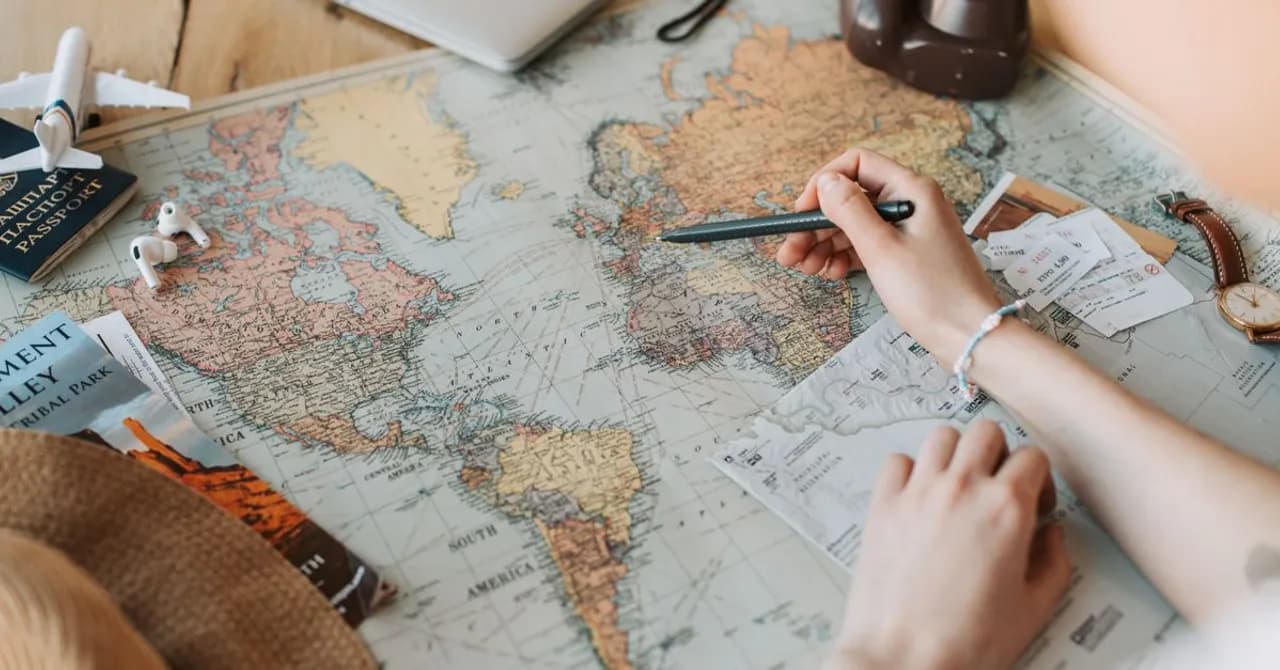
Save India, Egypt, Morocco, Vietnam, Peru and Nepal for your second trip. None of them is off limits: the US rates Vietnam Level 1 and the other five Level 2, the same as France or Spain. What makes them hard is touts, traffic, altitude, paperwork and stomach bugs, all easier once you have traveled before.
Contents
- How to read a travel advisory
- The six at a glance
- India: the big one, and the best reward
- Egypt: the pyramids come with a sales pitch
- Morocco: lost in the medina, on purpose
- Vietnam: safe on paper, wild on the road
- Peru: Machu Picchu is the easy part
- Nepal: the Himalaya on its own terms
- Why Cuba is not on this list right now
- The places that really are off the table
- How a working phone makes these six easier
This is not a list of dangerous countries. Millions of people visit every one of these six each year and go home with the best stories of their lives. It is a list of places that ask a lot of you on day one, at the exact moment a first-time traveler has the least practice.
A first trip abroad teaches you the basics: getting through an airport, paying in a new currency, getting online, finding your way, and noticing when something is off. Learn those somewhere forgiving, and these six become the trip of a lifetime instead of a stressful one. For somewhere forgiving, see the safest countries for your first trip abroad.
How to read a travel advisory
Every country below comes with its US State Department travel advisory level, because it is the only government scale with simple numbers. The levels were checked on 2 October 2026 against the State Department's own advisory feed. They can change at any time, so open the linked page again just before you book.
| Level | What the US government is saying | What it means for you |
|---|---|---|
| Level 1: Exercise normal precautions | The lowest level. Every trip abroad carries some risk. | Take the same care you would in a big city at home. |
| Level 2: Exercise increased caution | There are specific, known risks, such as crime or terrorism. | Go, but know what the risks are and adjust your habits. |
| Level 3: Reconsider travel | Serious risks to safety and security. | Think hard about whether the trip is worth it, and check your insurance still covers you. |
| Level 4: Do not travel | The highest level, where life-threatening risks are more likely. | Do not go. Help from your government may be impossible. |
Level 2 sounds alarming until you see who else is on it. France, Germany, Italy, Spain and the United Kingdom are all Level 2, mostly because of terrorism risk. So Level 2 means 'know the risks', not 'stay away'.
Advisories also work by region. A country can be Level 2 overall while one border area is Level 4, and that is the case for several countries below. The UK Foreign Office (FCDO) does not use numbers at all. It names the specific areas it advises against all travel, or all but essential travel, so we include its view too.
The six at a glance
| Country | US advisory | The hard part | Practice first in |
|---|---|---|---|
| India | Level 2 | Scale, touts, traffic, stomach bugs | Sri Lanka |
| Egypt | Level 2 | Touts and constant bargaining at the big sights | Greece or Türkiye |
| Morocco | Level 2 | Fake guides and the maze of the medinas | Portugal or Andalusia |
| Vietnam | Level 1 | Motorbike traffic and road safety | Thailand |
| Peru | Level 2 | Altitude, fake taxis, protests that close roads | Chile or Costa Rica |
| Nepal | Level 2 | Altitude, trekking permits and mountain logistics | The Alps in Austria or Slovenia |
India: the big one, and the best reward
| India | Details |
|---|---|
| US advisory | Level 2: Exercise increased caution, due to crime and terrorism, with higher risk in some areas |
| What that means | Most of India is visited without incident, but the US flags violent crime, including sexual assault at tourist sites, and terrorism risk in crowded places |
| UK advice | Against all travel to Jammu and Kashmir (including Srinagar, Pahalgam and Gulmarg) and within 10 km of the Pakistan border; against all but essential travel to Manipur |
| Emergency number | 112 for police, fire and ambulance |
| Entry | An e-Visa applied for at least 4 days ahead; the 30-day version costs US$25 (US$10 from April to June) for US and UK citizens, plus a 3% bank charge |
India is not one country to get used to but twenty, and the first days ask a lot of everyone. The UK government's advice is blunt about it: be cautious in tourist areas, where 'scammers, pickpockets and ticket touts target foreign nationals', and avoid people at railway stations offering tickets and tours.
Your stomach is the second test. The CDC's travel health guide puts the chance of traveler's diarrhea above 60% on a two-week trip to India, so pack oral rehydration salts and plan a slow first few days. In the north, the FCDO warns that air pollution is a major health hazard from October to February, which is also peak tourist season.
Then there is the traffic. The FCDO notes that India has a high death rate on its roads, and it advises against hailing taxis on the street, especially at night. Uber and Ola are widely available instead, and both need mobile data the moment you land.
Data is also the one thing to sort out before you fly. India removed the big international eSIM apps from its app stores in 2024, so buy and install your eSIM at home. One you already own keeps working once you land. Plans are on the India page.
Practice in Sri Lanka first. The food, the tuk-tuks, the temples and the slow, scenic trains are all there, on a smaller island that is far easier to get around. The US rates it Level 2.
Egypt: the pyramids come with a sales pitch
| Egypt | Details |
|---|---|
| US advisory | Level 2: Exercise increased caution, due to terrorism, crime and health, with higher risk in some areas |
| What that means | The main tourist sites are heavily guarded and widely visited, but the US warns of terrorism risk in the Northern and Middle Sinai, overcharging and scams in tourist areas, and harassment of women |
| UK advice | Against all travel to North Sinai and within 20 km of the Libyan border, and against all but essential travel to parts of the Western Desert and South Sinai |
| Emergency numbers | 122 police, 123 ambulance, 126 tourist police, 180 fire |
| Entry | A visa on arrival costs US$30 in cash at airport kiosks, or apply for an e-visa ahead on the official site, visa2egypt.gov.eg |
Nothing quite prepares you for standing in front of the Great Pyramid. The trouble is everything between you and it: camel rides with a price that changes halfway, 'free' guides, and people who will walk with you for an hour and then ask for money. The FCDO puts it simply: be cautious in tourist areas, 'where scammers and touts sometimes target foreign nationals'.
None of it is dangerous, but it is tiring, and a first-timer has not yet learned to say no politely and keep walking. Agree every price before anything starts, carry small notes, and book a licensed guide through your hotel for Giza and Luxor.
Two rules catch people out. Taking photos of children is prohibited, and so is photographing military sites, which includes the Suez Canal. Women traveling alone should take extra care in taxis at night, which is another reason to use a ride-hailing app with the trip on record.
Egypt also has its own rules for phones brought into the country, explained in our Egypt eSIM guide, along with which networks a travel eSIM uses there.
Practice in Greece, rated Level 1, for the ancient sites, the heat and the crowds. Or try Istanbul, rated Level 2, whose Grand Bazaar is the perfect training ground for polite but firm bargaining.
Morocco: lost in the medina, on purpose
| Morocco | Details |
|---|---|
| US advisory | Level 2: Exercise increased caution, due to terrorism |
| What that means | The only reason the US gives is terrorism risk at tourist sites, markets and transport hubs; there are no regions it tells you to avoid |
| UK advice | No areas advised against; petty crime is common in the medinas and on beaches |
| Emergency numbers | 190 police, 150 ambulance and fire, 177 gendarmerie outside cities |
| Entry | British visitors can stay up to 90 days without a visa, with a passport valid for at least 3 months after arrival |
Marrakech and Fez are designed to get you lost, and that is the charm. It is also the opening for the classic Moroccan hustle: a friendly stranger who tells you the road ahead is closed, offers to show you the way, and then wants paying, or leads you to a cousin's carpet shop.
The FCDO confirms it is 'common for people posing as official tourist guides to harass tourists', and advises hiring only guides with an official badge. It also warns that aggressive begging is common around ATMs, and that women traveling alone may get unwanted attention.
One detail surprises people: the FCDO says many taxis booked through ride-sharing apps in Morocco may be unregulated and unlicensed. The safer habit is to ask your riad or hotel to call a taxi for you.
A phone with data is your best defense in the medina. With a map that shows your own blue dot, nobody can convince you the road is closed. Download offline maps as a backup, and see the Morocco page for plans.
Practice in Portugal (Level 1) or Andalusia in southern Spain (Level 2). Granada's Albaicín has the Moorish lanes and the tile work, and when you are ready, the ferry from Tarifa reaches Tangier in about an hour.
Vietnam: safe on paper, wild on the road
| Vietnam | Details |
|---|---|
| US advisory | Level 1: Exercise normal precautions, the lowest level |
| What that means | The US calls Vietnam generally safe; petty crime is common in tourist areas, and landmines and unexploded ordnance remain in places, though the risk is low in towns and tourist areas |
| UK advice | No areas advised against; tropical storm season runs from May to November |
| Emergency numbers | 113 police, 114 fire, 115 ambulance (operators speak Vietnamese only) |
| Entry | British visitors get 45 days visa-free; Americans need an e-visa for up to 90 days |
Vietnam is rated Level 1, a level below the UK or France. So why is it here? Because the risk is the road, not crime. Crossing a Hanoi street for the first time means stepping into a river of motorbikes and walking at a steady pace while it flows around you. It works, but it takes nerve.
Renting a motorbike is where first-timers really get hurt. The FCDO says motorbike accidents are common and riding is much riskier than at home. To ride legally you need the 1968 International Driving Permit plus your own licence, and third-party insurance is mandatory. Many travel insurance policies won't pay out for a rider without the right licence, so check yours before you get on.
Two smaller things: bag snatchers on motorbikes work the busy tourist streets, so carry your phone on the side away from the road. And the FCDO warns that even small amounts of methanol in alcoholic drinks can kill, and that you can't taste or smell it, so stick to sealed, branded bottles.
Grab is the easy fix for both the traffic and the taxi meter. It shows the driver and the price before you go, and the FCDO suggests using it to check vehicle details. Don't buy a pre-registered SIM from a street seller, either: Vietnam now re-checks your face when a SIM moves to a new phone. An eSIM avoids the problem, and plans are on the Vietnam page.
Practice in Thailand, rated Level 1. It has the same street food, scooters, night buses and Grab, plus more English and a tourist trail that forgives mistakes.
Peru: Machu Picchu is the easy part
| Peru | Details |
|---|---|
| US advisory | Level 2: Exercise increased caution, due to crime, civil unrest and kidnapping risk, with Level 4 areas |
| What that means | Do not travel to the Colombia border area of Loreto, the VRAEM valleys, or parts of Ayacucho, Cusco, Huancavelica and Junín. The city of Cusco, the Sacred Valley, the Inca Trail and Machu Picchu are not in those areas |
| UK advice | Against all but essential travel to the VRAEM and the Putumayo border area of Loreto |
| Emergency numbers | 105 police, 106 ambulance, 116 fire |
| Entry | British visitors normally get up to 90 days in any 180 without a visa |
Peru's big challenge is height. Cusco sits at about 3,400 meters, and the FCDO calls altitude sickness 'a serious risk' there and in Puno, the Colca Canyon and Kuelap. Many visitors fly from sea-level Lima straight to Cusco and spend their first day with a headache and no breath. Planning two easy days, or starting lower in the Sacred Valley, makes all the difference.
The second challenge starts at the airport. The FCDO warns of 'robbery by criminals posing as taxi drivers, especially at Jorge Chavez International Airport', and of express kidnappings, where victims are driven between ATMs. The fix is simple: book your transfer ahead or use an app, never a driver who approaches you in arrivals.
Peru also has frequent demonstrations that can shut roads, trains and highways with little warning, so leave a spare day before an international flight. And steer clear of ayahuasca retreats: the US and UK both report travelers who became seriously ill and, in some cases, died.
Our South America guide covers coverage in the Andes, and plans are on the Peru page.
Practice in Chile or Costa Rica, both rated Level 2. Chile has the Andes and real altitude in the Atacama, and both are Spanish practice with easier logistics.
Nepal: the Himalaya on its own terms
| Nepal | Details |
|---|---|
| US advisory | Level 2: Exercise increased caution, due to civil unrest |
| What that means | The level was lowered to 2 after the nationwide protests of September 2025 ended. The US still warns that demonstrations can start with little notice, and that medical care is limited outside Kathmandu |
| UK advice | No areas advised against; the monsoon, normally June to October, brings floods and landslides |
| Emergency numbers | 100 police, 1144 tourist police, 101 fire |
| Entry | A visa is required, and you can apply online up to 15 days before you arrive; your passport needs 6 months' validity |
Most people go to Nepal to trek, and that is what makes it a second-trip country. The trails are not technical, but they climb high, and the FCDO warns that altitude sickness is a risk in the trekking areas, especially above 3,000 meters. The cure is time: plan rest days, climb slowly and turn around if symptoms get worse.
You can't simply set off alone anymore, either. Since 2023, Nepal has required foreign trekkers to use a local guide or porter in its national parks and protected areas, a rule the FCDO confirms is still in force, and the Nepal Tourism Board lists the permits each route needs. Book through a registered agency, which handles the TIMS card and permits for you.
The mountains also decide when you leave. The FCDO notes that flights in the high mountains are often delayed by weather and cancellations are common, so build spare days in before your flight home. Check that your insurance covers helicopter rescue, which the FCDO says usually costs £1,000 to £2,000 or more per flying hour. It also warns of guides who rush clients uphill and then call in a helicopter evacuation for a commission.
Mobile coverage thins out on long stretches of trail, including parts of the Annapurna Circuit, according to the FCDO. Download offline maps before you start, and tell someone your route. Plans are on the Nepal page.
Practice on a hut-to-hut hike in the Austrian Alps or Slovenia's Julian Alps, both rated Level 1. You will learn how your body copes with long days, changing weather and mountain huts, with rescue never far away.
Why Cuba is not on this list right now
Cuba would normally belong here: no international cards, little internet, and a lot of cash to carry. But on 25 September 2026 the UK Foreign Office was advising against all but essential travel to the whole country. It reports repeated collapses of the power grid, airports without aviation fuel, and several airlines suspending flights. That puts Cuba beyond 'demanding' for now, so check the latest advice before planning a trip there.
The places that really are off the table
Some countries are not for a first trip, a second trip or any trip right now. On 2 October 2026 the US State Department rated 23 destinations Level 4, Do not travel, including Afghanistan, Iran, Russia, Syria, Ukraine and Yemen. The full, current list is on the State Department's advisory page.
If you are not American, check your own government's advice as well. Your consulate is the one that will help if something goes wrong, and your travel insurance may not cover you somewhere your own government says not to go.
How a working phone makes these six easier
Almost every tip above comes back to one thing: being online the moment you land. A ride-hailing app replaces the airport taxi pitch. A live map makes the 'road is closed' story pointless. Translation apps handle the bargaining, and a booking confirmation on your screen settles arguments about the price.
- Install your eSIM at home, especially for India, where the big eSIM apps were removed from the local app stores.
- Turn the eSIM on before you leave the plane, so ride-hailing works in the arrivals hall.
- Download offline maps for each city in case coverage drops in the medinas or the mountains.
- Save the emergency numbers above in your phone before you need them.
- Share your live location with someone at home when you take a long taxi ride or go trekking.
Ready for the other end of the scale? Our guide to street-smart travel in South Africa, Brazil and more covers the habits that keep you safe in places where opportunistic crime is the main risk.
Browse destinations →Which countries should you avoid on your first trip abroad?
Avoid any Level 4 'Do not travel' country, on any trip. Beyond that, countries like India, Egypt, Morocco, Vietnam, Peru and Nepal are safe for most visitors but demanding, so they are better on a second or third trip, once you know how to handle touts, traffic and new currencies.
Is a Level 2 travel advisory dangerous?
No. Level 2, Exercise increased caution, means there are specific risks worth knowing about. France, Germany, Italy, Spain and the United Kingdom are all Level 2. It is a reason to read the advisory, not a reason to cancel.
Is Vietnam safe for first-time travelers?
The US rates Vietnam Level 1, its safest rating, and crime against tourists is mostly petty. The real risk is road traffic, especially riding a motorbike without the right licence and insurance. If you skip the motorbike, Vietnam is a manageable first trip in Asia.
Is India too hard for a first trip abroad?
It can be. India is huge, busy and full of touts, and stomach bugs are very common. Plenty of people start there and love it, but a first trip somewhere gentler, like Sri Lanka, makes India far more enjoyable.
Do I need a visa for these countries?
It depends on your passport. India needs an e-Visa in advance. Egypt sells visas on arrival for US$30 in cash, or you can apply for an e-visa online. Vietnam is visa-free for UK citizens for 45 days, while Americans need an e-visa. Morocco and Peru are visa-free for UK visitors. Check your own government's travel advice before you book.