Best eSIM for Pakistan: cities to the Karakoram
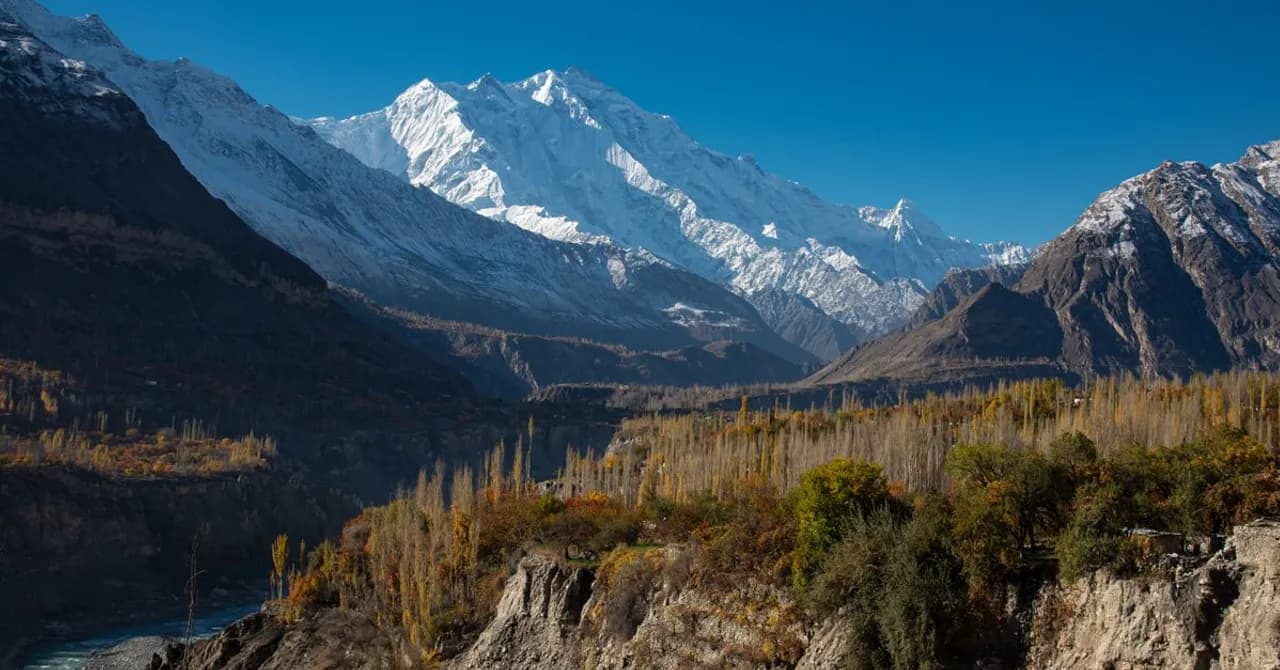
Plan on 6 to 10 GB for a one to two week trip mixing Lahore, Islamabad or Karachi with a Hunza or Skardu leg: WhatsApp calls, InDrive rides and mountain photography add up fast. A travel eSIM also skips the passport-and-fingerprint check a local SIM needs, and the 60-day device registration clock that comes with it.
Contents
- Why a travel eSIM is the best option for Pakistan
- What actually eats your data in Pakistan
- A realistic one- to two-week budget
- Before you fly, and the moment you land
- Is your phone eSIM-ready?
- Keep your home number for bank codes
- Where you'll lean on data most
- The one signal gap a city SIM won't warn you about
- Planning to trek toward K2? There's a permit for that
Pakistan is having a moment as a travel destination: Hunza's terraced valleys and the Karakoram Highway's high passes have pulled a wave of independent travelers north, on top of the usual flow of business trips and family visits to Lahore, Islamabad and Karachi. Lahore's walled-city lanes around the Badshahi Mosque, Islamabad's Faisal Mosque and Margalla Hills trails, and Karachi's port-city sprawl are a different trip entirely from a week spent chasing mountain views.
The two halves of a Pakistan itinerary look nothing alike: dense city networks against some of the least-covered high terrain anywhere a Zwitchy plan reaches. Here's a realistic data plan for both, and what actually changed here in the last year.
Why a travel eSIM is the best option for Pakistan
Roam on your home plan, buy a local SIM, or install a travel eSIM before you go, and for Pakistan the eSIM wins by more than convenience. Roaming is the priciest of the three by a wide margin. A prepaid SIM from Jazz, Zong or Ufone needs an original passport, a visa page and a live fingerprint scan at the counter.
That local SIM also starts a clock: Pakistan's telecom regulator blocks a phone's IMEI 60 days after a local SIM first connects unless you register the device, and registering after 120 days adds an import duty. A travel eSIM never starts that clock, it rides the network as a foreign roamer, exactly like your home SIM would abroad. Weighing it up? See eSIM vs local SIM vs roaming.
Buying a local SIM at a Jazz or Zong counter instead? DIRBS gives visitors a free 120-day window to register the device, but an unregistered IMEI is blocked outright after 60 days if you skip that step. A travel eSIM skips the registration question entirely: it's a foreign roamer, not a locally issued number.
What actually eats your data in Pakistan
WhatsApp carries most communication in Pakistan, voice and video calls home, group chats, even business, so it runs almost constantly. Ride-hailing comes next, and if a guide still points you to Careem, that advice is out of date: Careem shut down its Pakistan ride-hailing business in July 2025, and InDrive and Yango now carry most of that traffic instead.
In the north, photos and video of Hunza's terraced valleys or the Karakoram Highway's switchbacks add up faster than most people plan for.
A realistic one- to two-week budget
Most travelers land between 6 GB and 10 GB for one to two weeks, more if a Hunza or Skardu leg means long offline stretches followed by a big upload once you're back in range. Use this as a guide:
- Light (≈4–5 GB): city days in Lahore, Islamabad or Karachi on WhatsApp, maps and InDrive.
- Typical (≈6–8 GB): the above plus a Hunza or Skardu leg with regular photo and video uploads.
- Heavy (10 GB+ or unlimited): you hotspot a laptop to back up photos, or add a Karakoram trekking stretch.
| Activity | Rough data use |
|---|---|
| Maps & InDrive/Yango navigation | ~50 MB / day |
| WhatsApp voice + video calls | ~150 MB / day |
| Social scrolling | ~600 MB / hour |
| HD video streaming | ~1.5 GB / hour |
Before you fly, and the moment you land
Install the eSIM at home on Wi-Fi, it doesn't start the clock. Sort the visa first: since early 2026 Pakistan has suspended its free arrival visa for the 126 nationalities that used to qualify, so most visitors now need a paid e-Visa instead.
That e-Visa can take up to seven business days to process, not the 24-48 hours the old system gave, so apply well before you book flights. Citizens of Saudi Arabia, the UAE, Kuwait, Oman, Qatar and Bahrain are still exempt.
Most international arrivals land at Islamabad International (ISB), Lahore's Allama Iqbal International (LHE) or Karachi's Jinnah International (KHI). Once you're through immigration, set Zwitchy as your data line and switch on Data Roaming for it (that just means "use the eSIM's partner network," never your home carrier). Unsure on size? Start with 6-7 GB and top up in seconds if you run low.
Is your phone eSIM-ready?
Any eSIM-capable phone works on Pakistani partner networks: iPhone XS / XR or newer, Google Pixel 3 and up, and recent Samsung Galaxy flagships. Two catches, the phone must be carrier-unlocked, and it's worth checking Settings → General → About for an available EID before you rely on it. Because the eSIM runs alongside your physical SIM, most travelers leave their home line in for calls and texts and simply select Zwitchy for mobile data.
Keep your home number for bank codes
Two-factor codes from your bank, and any Pakistani hotel or airline booking that texts a confirmation, still go to whatever number you gave them. Keep your home SIM installed with its data roaming switched off, so those texts land on your usual number while Zwitchy carries the data. It matters more here than in most countries: a large share of Pakistan travel is visiting family on a foreign passport, and losing a home-country banking app mid-trip is a bigger problem than a slow map load.
Where you'll lean on data most
Jazz, Ufone and Zong now split most of the market between them: Ufone absorbed Telenor Pakistan outright on 1 July 2026, so a fourth operator you might remember by that name no longer exists on its own. All three run 4G across every city and most main highways, and 5G went live nationwide on 19 March 2026 after Jazz, Zong and Ufone each won spectrum, reaching Islamabad, Lahore, Karachi, Peshawar and Quetta first.
The one signal gap a city SIM won't warn you about
Gilgit-Baltistan is the real gap. Hunza, Skardu and the Karakoram Highway's mountain passes run through some of the most dramatic, least-covered terrain a Zwitchy plan reaches: signal clings to the valley floor and drops out completely on the higher switchbacks and at Khunjerab Pass itself. That's terrain, not a plan limit, no operator has built towers out that far.
A second gap isn't terrain at all. Pakistani authorities have repeatedly ordered province- or district-wide mobile shutdowns for security or political reasons: Balochistan's 36 districts went dark for most of August 2025, and South Waziristan lost mobile service for ten days in 2026. A shutdown like that blocks every operator and every eSIM alike, so check local news before you count on connectivity in an area with active unrest.
Planning to trek toward K2? There's a permit for that
Most of what draws travelers north needs no permit at all: Hunza, Skardu, Shigar, Deosai National Park and the Karakoram Highway itself dropped their old blanket foreigner NOC requirement years ago.
Push further toward K2 Base Camp, Concordia or the Baltoro Glacier and that changes: Gilgit-Baltistan's own tourism department requires a permit for any route close to an international border or under special security considerations, arranged through the Ministry of Interior or a licensed tour operator before you go. Sort it well ahead of the trip, not at a checkpoint partway up the glacier.
Continuing over the Khunjerab Pass into China? China runs entirely separate networks and needs its own eSIM, and the pass itself sits above 4,600 meters, well past where any carrier's signal reaches. Overland tourist crossings into India, Afghanistan or Iran are effectively closed to casual travelers, so treat a Pakistan trip as self-contained rather than the first leg of a wider regional route. Ready to pick a size?
Do I need to register my passport or fingerprints to use a Pakistan eSIM?
No. That in-person passport check and biometric fingerprint scan only apply to a local prepaid SIM bought at a counter. A travel eSIM installs and activates from home with just an email address for delivery.
Will PTA block my phone if I use a travel eSIM in Pakistan?
No. PTA's device registration and 60-day blocking rule is triggered by inserting a local Pakistani SIM, not by roaming. A travel eSIM connects as a foreign roamer, the same way your home SIM would abroad, so it never starts that clock.
How much data do I need for two weeks combining Lahore, Islamabad and Hunza?
Budget 6-8 GB: a couple of gigabytes for maps, InDrive and WhatsApp calls, the rest for the photo and video most travelers shoot once they reach the mountains.
Will I have signal in Hunza or along the Karakoram Highway?
Mostly, in the valley towns. Coverage clings to the valley floor and drops out on higher switchbacks and at Khunjerab Pass itself, that's the terrain, not a plan limit.
Do I need a visa before I fly to Pakistan?
Almost certainly, and you should apply early. Since early 2026 most nationalities that once qualified for a free arrival visa now need a paid e-Visa that can take up to seven business days to process.
Which network will my eSIM use in Pakistan?
Zwitchy's Pakistan plan rides the country's partner networks among Jazz, Ufone and Zong, the same three operators now running the country's 4G and, since March 2026, 5G.
Is Careem still the best way to get a ride in Pakistan?
No. Careem exited Pakistan's ride-hailing market in July 2025. InDrive and Yango now carry most of that traffic, and both work fine on a travel eSIM's data.
Is my phone eSIM-compatible for Pakistan?
Any eSIM-capable phone works: iPhone XS/XR or newer, Google Pixel 3 and up, and recent Samsung Galaxy flagships, as long as it's carrier-unlocked.
Popular Pakistan eSIM plans
Tap a size to see live Pakistan prices and buy in a couple of taps.
Get a travel eSIM for 200+ destinations in under a minute.
Get your Pakistan eSIM →

