Countries where you cannot buy an eSIM on arrival
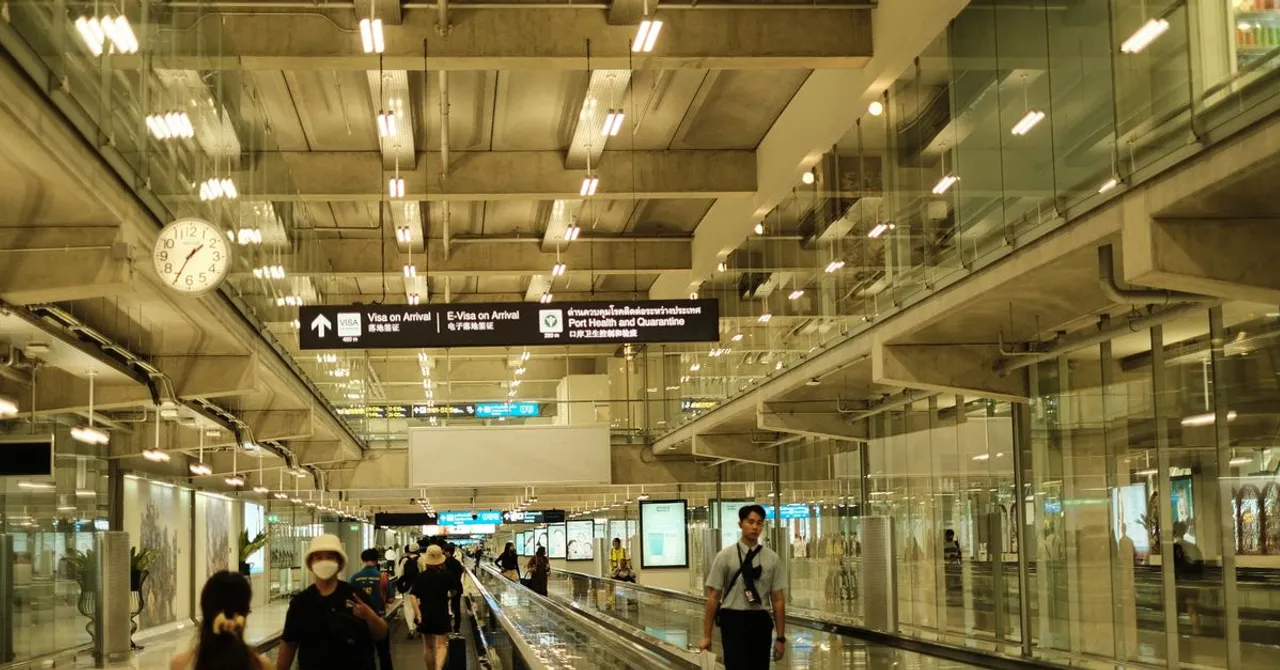
Türkiye is the clearest case: its regulator has blocked travel eSIM storefronts at the network level since July 2025, so the shop is unreachable from inside the country. India removed the apps from its stores in 2024. Installing before you fly fixes every case except Russia, where a foreign profile loses data for its first 24 hours.
Contents
- An eSIM cannot be conjured out of thin air
- Türkiye blocked the shops, not the technology
- India took the apps off the shelves
- China is an Android problem wearing an eSIM costume
- Russia hands you a working eSIM and 24 hours of silence
- What actually breaks, country by country
- Three countries people add to this list that do not belong on it
- If you have already landed
- The habit that removes every one of these problems
Almost every guide to travel eSIMs tells you that you can buy one in two minutes from anywhere. That is true in most of the world and it is the reason the product exists. It is also the sentence that strands people, because a handful of countries have made the shop unreachable from inside their own borders.
The failure is quiet and it happens at the worst moment. You land, you open the app or the site, and it times out. Nothing is wrong with your phone, your card or the eSIM you were about to buy. The shop is simply not reachable from where you are standing.
An eSIM cannot be conjured out of thin air
Start with the mechanism, because it explains why the recovery options are so thin. An eSIM profile is not stored in a QR code. Under GSMA's consumer provisioning specification, SGP.22, the code carries an address and a token, and your phone then fetches the actual profile from a server over the internet.
Apple states the practical consequence in one line on its own support page: your new iPhone must be connected to a Wi-Fi network or hotspot. Apple adds one narrow exception for eSIM-only models in some countries, which can activate without Wi-Fi.
So the chain is circular. Installing the eSIM needs internet. The eSIM is the thing that was going to give you internet. Airport Wi-Fi normally breaks the circle, and in most countries it does. Where the storefront itself is blocked, it does not, because the block applies to that airport Wi-Fi too.
This is why "I will sort it when I land" fails in a way that buying a bottle of water when you land does not. There is no counter for it, no cash alternative, and the shop that would sell it to you is behind the same network you cannot reach.
Türkiye blocked the shops, not the technology
Türkiye is the country this article exists for. On 10 July 2025 the regulator, BTK, ordered access blocking of eight international travel eSIM storefronts, in a decision numbered E-98966759-450.08-36681. It was extended on 17 July 2025 to twenty-three, and again on 9 October 2025 to thirty-seven.
Be careful how you read that, because the reporting is better than the paperwork. BTK has never published the decisions. Turkish press gives the ground as selling mobile communications without a licence, under the Electronic Communications Law No. 5809, and the Freedom of Expression Association's own lawyers dispute that any clear legal basis exists.
What is blocked is the storefront: the websites and the apps, from Turkish networks. It is not a ban on eSIM technology and it does not switch off a profile already sitting on your phone. An eSIM bought before you flew keeps roaming on Turkish networks exactly as it always did.
There is a second-order trap in that distinction, and it catches people who did prepare. Topping up runs through the same storefront as buying. So a traveller who installed at home, ran out of data in Cappadocia and went to add more can find the top-up page unreachable while the eSIM itself still works.
As of September 2026 no published decision has reversed any of this, and none of it is announced anywhere a traveller would look. Our Türkiye guide covers the rest of what the country asks of a visitor's phone, including the separate device-registration rule, and the plans themselves are on the Türkiye destination page.
India took the apps off the shelves
India is the older case and a different mechanism. On 5 January 2024 Google removed two of the largest international eSIM apps from the Indian Play Store, and Apple had done the same on the Indian App Store by 7 January, on a direction from the Department of Telecommunications.
The stated ground was a missing No Objection Certificate, which India requires of anyone selling foreign SIMs in the country. No order text has ever been published, so treat the detail as press reporting rather than as a rule you can look up. The apps have not returned.
Two things follow. Buying inside India from those apps is the part that broke, and installing an eSIM you already own is not, because the profile download never touches an app store. India's own networks support eSIM normally for residents, so this was never a technology ban. Plans for the country sit on the India destination page.
China is an Android problem wearing an eSIM costume
China turns up on every list like this and it mostly does not deserve to. The Google Play Store has been unreachable in mainland China since 2012, so an Android traveller who lands without data cannot download a provider's app. That is real and it is worth planning around.
The rest of the usual claim does not hold up. The Apple App Store operates normally in mainland China, and we found no evidence that travel eSIM storefronts are specifically blocked there. So this is a platform problem for Android users rather than a country that has banned the product, and it is a reason to install at home rather than a reason to panic.
What China genuinely does ask of you is different, and it is covered in the China guide: which services are reachable once you are online, and what a roaming profile changes about that.
Russia hands you a working eSIM and 24 hours of silence
Russia is the case where buying is not the problem and the outcome is the same. Since early October 2025 a foreign SIM or eSIM that registers on a Russian network has had its mobile data and SMS blocked for 24 hours, with voice calls unaffected. The measure is described as an anti-drone precaution.
Sourcing matters here more than usual. That account was reported by The Moscow Times on 8 October 2025, attributed to the Belarusian communications ministry, and the same article notes that Russian authorities have not publicly confirmed it. A separate Russian measure announced by the digital development ministry on 10 November 2025 applies a similar cooling-off period to Russian SIM cards after roaming or 72 hours of inactivity.
For a traveller the distinction is academic and the effect is not. A day without data at the start of a short trip is most of the trip, and installing early does not exempt you, because the clock starts when the profile first registers on a Russian network rather than when you bought it. Plans are on the Russia destination page.
What actually breaks, country by country
The useful question is never "is it banned", it is "which specific step fails". Four countries, four different broken steps.
| Country | What breaks | What still works |
|---|---|---|
| Türkiye | Buying and topping up from inside the country, since July 2025 | An eSIM installed before arrival, roaming normally |
| India | Buying in-country from the delisted apps, since January 2024 | Installing and using an eSIM bought elsewhere |
| China | Downloading an Android app, since Google Play left in 2012 | The Apple App Store, and any profile already installed |
| Russia | Data and SMS for the first 24 hours on a foreign profile | Voice calls, and data after the window closes |
Three countries people add to this list that do not belong on it
This is worth saying plainly, because the same three names circulate in eSIM marketing and none of them is a blocked country.
Egypt is the reverse of the problem. Its device-registration and customs regime is triggered by putting a local Egyptian SIM into a foreign handset, so a roaming travel eSIM is the thing that avoids the paperwork rather than the thing that is caught by it. The Egypt guide walks through what that means for a two-week trip.
Vietnam and Indonesia both require identity verification, and in Indonesia's case device registration, for local carrier services. Neither restricts a foreign travel eSIM, and neither blocks a storefront. If a page tells you otherwise, it is describing a local SIM purchase and calling it an eSIM rule.
If you have already landed
Assume for a moment that you are reading this at an arrivals hall with no data. The options are thinner than you would like, but they exist, roughly in the order worth trying.
- Airport Wi-Fi first, and expect it to want an SMS code your unconnected phone cannot receive. Hotel Wi-Fi is often the better bet if you can get to it.
- If you bought the eSIM before you flew and it is not installing, you may have the details to add it by hand rather than by code: our manual activation guide covers the fields.
- A local prepaid SIM from an airport counter still works in Türkiye, India and China. Bring your passport, expect a queue, and expect the tourist tariff. Russia is the exception, because a SIM there now needs a SNILS, a verified Gosuslugi account and biometric registration, none of which a visitor can finish at a counter.
- Ask someone to hotspot you for two minutes. That is genuinely enough to download a profile, and it is the fastest recovery in a blocked country.
- In Türkiye specifically, a top-up will fail for the same reason a purchase does, so size the plan generously before you fly rather than planning to extend it there.
The habit that removes every one of these problems
Install before you fly. That is the whole lesson, and it costs nothing, because a travel eSIM does not start counting down when you install it.
Most plans begin when the profile first connects to a network at the destination, not at purchase, which is why buying a week early is free and buying at the gate is a gamble. We cover exactly how that timing works in how long an eSIM can wait before you activate it, and the pre-flight sequence in setting up your eSIM before you fly.
Do it on home Wi-Fi, the evening before, while you still have a working internet connection and a second device to check things on. Then landing in Istanbul is the same as landing anywhere else, which is the point.
Can I still use a travel eSIM in Türkiye?
Yes. What BTK blocked is access to the storefronts from Turkish networks, not the technology. An eSIM you bought and installed before you arrived roams on Turkish networks normally. The part that fails inside the country is buying a new one, and topping up an existing one, because both run through the blocked storefront.
Will my eSIM stop working when I land in a country that blocks the shops?
No. Blocking a website or an app does not reach a profile already on your phone. The profile talks to the mobile network, not to the shop you bought it from. Once it is installed it behaves like any other roaming SIM for as long as the plan lasts.
Why can I not just buy one on the airport Wi-Fi?
In most countries you can, and it works fine. In Türkiye the block is applied at the network level, which includes the airport Wi-Fi, so the storefront is unreachable there too. In India the apps are absent from the local app stores, so there is nothing to download in the first place.
Does buying an eSIM early waste part of the plan?
Not with a plan that starts on first connection rather than on purchase. The profile sits dormant on the phone until it registers on a network at the destination. Check the terms of whatever you buy, since a plan that starts at purchase would genuinely punish you for preparing early.
Is a local SIM the safer choice in these countries?
It is a working fallback rather than a better plan. You still queue at a counter, hand over a passport to be copied, and pay a tariff written for people with no alternative. In Türkiye it also brings the country's device-registration rules into a trip that had nothing to do with them.
What about China, can I buy an eSIM after I arrive?
On an iPhone, probably: the Apple App Store operates normally in mainland China and we found no evidence of a storefront block. On Android it is much harder, because the Google Play Store has been unreachable in mainland China since 2012, so the app you would download is not available to you.
Are these blocks permanent?
Nobody can say, and that is part of the problem. BTK has never published the decisions, so there is no document to watch for a reversal, and India has published no order either. Treat the list as the state of things in September 2026 rather than as a permanent map.


