How much data does a day of travel actually use?

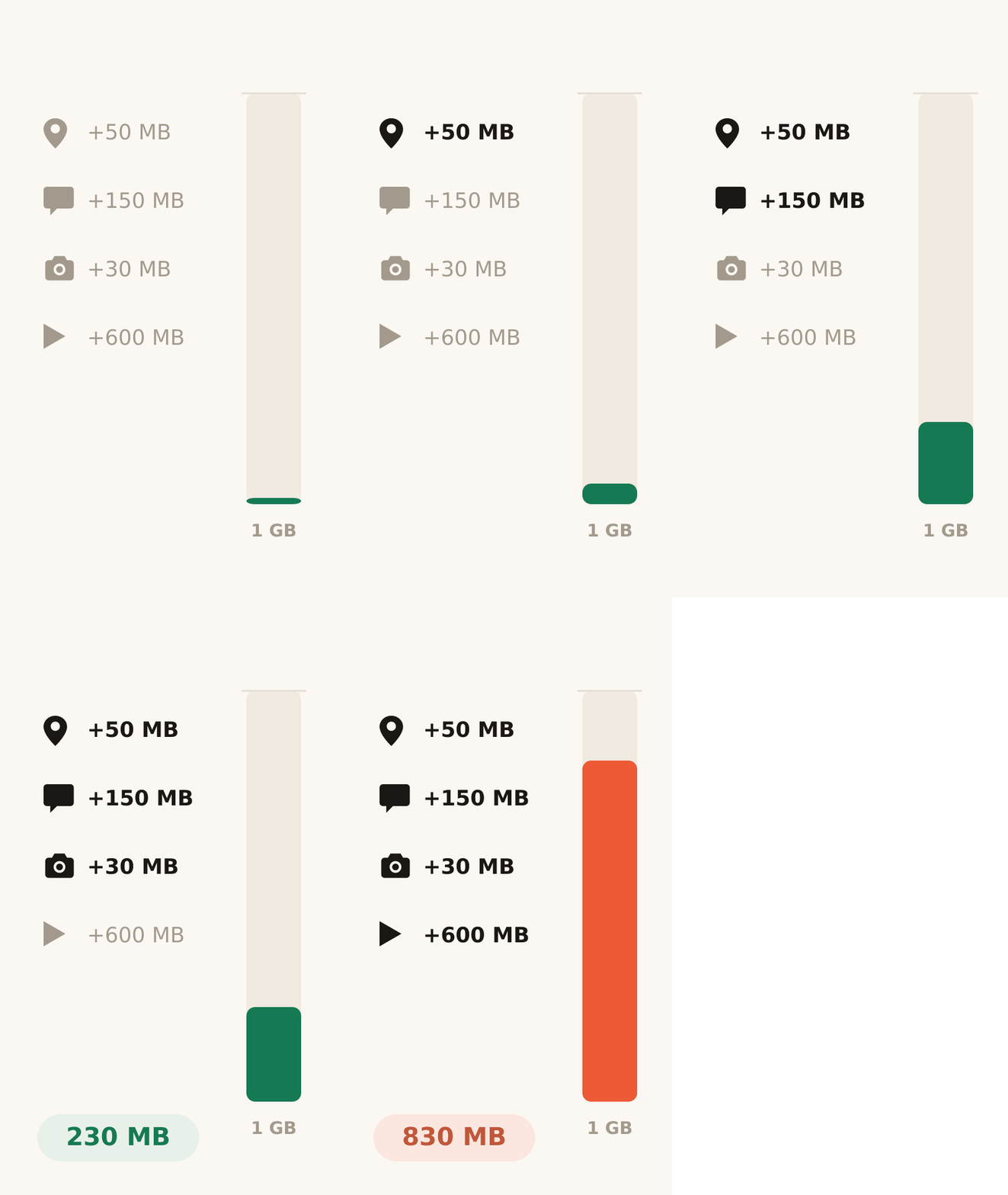
Most sightseeing days run 150 MB to 300 MB: roughly 50 MB of maps, 100 MB of messaging and photos, and light browsing on top. Video is the multiplier. An hour of social scrolling adds about 600 MB and HD streaming about 1.5 GB, which is why two travelers' days can differ tenfold.
Contents
Most people size their travel data on fear rather than numbers, and the numbers are smaller than the fear. The apps you lean on hardest abroad, maps, translation, messaging, are some of the lightest on your phone. Here is what a real day of travel actually uses, megabyte by megabyte, and the three habits that quietly turn a 200 MB day into a 2 GB one.
A real day, megabyte by megabyte
Picture an ordinary sightseeing day. You navigate from your hotel to the old town: 1 to 3 MB. You send a voice note home: well under 1 MB. You translate a menu with your camera: about 1 MB. A taxi app ride costs 1 or 2 MB, checking reviews for a lunch spot 2 or 3 MB, refreshing a boarding pass or a train timetable barely registers. Even a 12-minute podcast is only 7 to 14 MB. Add it all up, with the messaging that runs all day underneath, and the essentials of a full day of getting around come to well under 100 MB.
What moves the total is media. A set of photos backing up to the cloud is 15 to 45 MB. A video call home runs 5 to 13 MB a minute. And the feeds are the big one: an hour of social scrolling is around 600 MB, because it is really video autoplaying in your hand.
| Activity | Rough data use |
|---|---|
| Maps & navigation, all day | ~50 MB / day |
| Camera translation of menus and signs | ~1 MB / menu, ~100 MB / day heavy use |
| Messaging, photos and voice notes | ~100–150 MB / day |
| Music streaming | ~60 MB / hour |
| Social feed scrolling | ~600 MB / hour |
| HD video streaming | ~1.5 GB / hour |
| Hotspot for a laptop workday | several GB / day |
The three habits that blow the budget
- Autoplaying feeds: scrolling on the train is streaming video, whatever the app calls it. Save it for hotel Wi-Fi and you cut the single biggest line item.
- Cloud photo backup on cellular: a day of holiday photos syncing in the background can outweigh everything else you did. Set backup to Wi-Fi only.
- Tethering a laptop: hotspot use pulls desktop-sized downloads through your travel data. One video call and an OS update can be a gigabyte before lunch.
Sizing a fixed plan with these numbers
For a bucket plan, the arithmetic is straightforward: a maps-and-messaging traveler fits comfortably in 3 to 5 GB for two weeks, a typical tourist who posts and scrolls lands around 8 to 10 GB, and streamers or tetherers should look at big buckets or unlimited. Check your usage as you go and you'll know by day three whether your estimate was right.
Or skip the estimate entirely
The reason day-to-day numbers matter so much is that plans make you guess in advance. A pay as you go balance doesn't: data comes off a prepaid credit balance by the megabyte, at each country's published rate, so a 200 MB day simply costs a fraction of what a 2 GB day does. Light and unpredictable usage is exactly where metering shines. Heavy, predictable usage is where a fixed bucket wins, because per gigabyte it's cheaper.
How much data does Google Maps use per day of travel?
Around 50 MB for a full day of walking and transit navigation, less if you download offline maps in advance. It is one of the lightest apps you'll use abroad.
How much data does translating menus use?
Camera translation runs about 1 MB per menu or sign. Even leaning on it all day rarely passes 100 MB, so translate freely.
Why did I use 2 GB in one day?
Almost always video: autoplaying social feeds, HD streaming, or a photo library backing up over cellular. The sightseeing itself rarely breaks 300 MB.
How much data do I need for two weeks abroad?
3 to 5 GB if you navigate and message but scroll on Wi-Fi, 8 to 10 GB for typical posting and browsing, more if you stream or tether. Or use a metered balance and skip the estimate.
Does a video call use a lot of data?
About 5 to 13 MB per minute depending on quality, so a nightly ten-minute call home adds roughly 1 to 4 GB over two weeks. Voice-only calls use a tenth of that.