Best eSIM for Trinidad and Tobago: coverage from Port of Spain to the Tobago coast
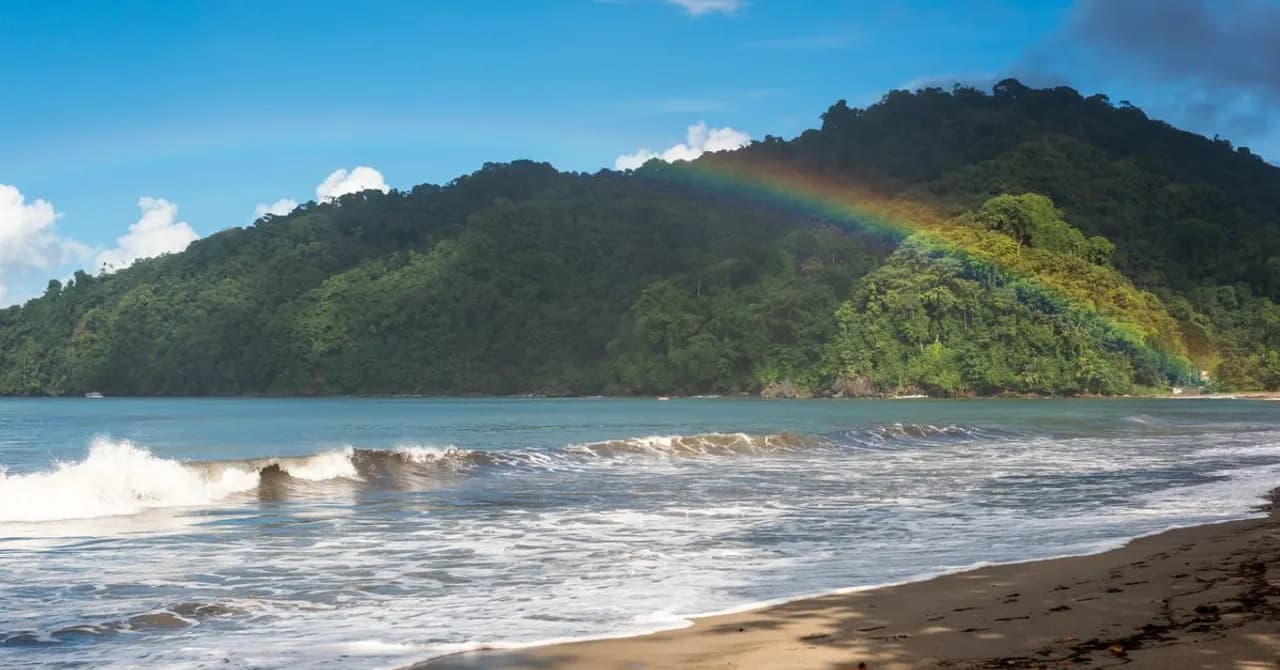
One plan covers both islands, so you won't need a second SIM when you cross between them. Budget roughly 3–4 GB for a quiet Tobago beach week, 5–8 GB if you drive both islands and share photos regularly, and 12 GB or unlimited for Carnival, when video posting is what really drains data.
Contents
Trinidad and Tobago is really two trips sharing one flag. Trinidad is dense, industrial and loud, the beating heart of Carnival, steel pan and a nightlife scene that runs on fetes and food from a roadside doubles vendor. Tobago, a short hop away, is the slow-down island: dive boats, Buccoo Reef, and a rainforest reserve older than the country itself. Whichever mix you're doing, or both, one eSIM plan covers you across the whole country, no second SIM needed when you cross the water. Here's which networks carry you, a realistic data budget, and where signal actually thins out.
Why a travel eSIM is the best option for Trinidad and Tobago
Roam on your home plan, buy a local SIM, or install a travel eSIM before you go. Roaming is the priciest option by a wide margin, often the cost of a whole local plan for a single day abroad. A local SIM from Digicel or bmobile is cheap per gigabyte, but buying one means a passport in hand at the counter for the mandatory ID registration, and swapping it in costs you your home number for the trip, awkward when a bank or airline still verifies with an SMS code. A travel eSIM installs from home over Wi-Fi, keeps your own number live alongside it, and rides the same partner networks a local SIM would. Weighing it up? See eSIM vs local SIM vs roaming or compare the real costs.
What actually eats your data in Trinidad and Tobago
Four things dominate a Trinidad and Tobago trip: Google Maps, essential for Trinidad's winding East-West corridor traffic and Tobago's coastal roads out to Charlotteville; WhatsApp, the default here for messaging and voice calls, to a taxi driver, a guesthouse or family; photo and video from the beach, the reef, or a fete, all shared home in real time; and, if Carnival lands in your trip, a heavy spike from mas bands, J'ouvert and Panorama, everyone around you filming and posting at once. Maps and messaging are light; it's video, especially during Carnival, that quietly does most of the damage.
A realistic data budget
Most travelers land between 4 GB and 8 GB for a typical one- to two-week trip outside of Carnival season. Use this as a guide:
- Light (≈3–4 GB): a Tobago beach week on maps, WhatsApp and evening Wi-Fi at the hotel.
- Typical (≈5–8 GB): the above plus regular photo and video sharing, and driving both islands.
- Carnival or a fete-heavy trip (12 GB+ or unlimited): hotspot a laptop or plan to post video from the road all week.
| Activity | Rough data use |
|---|---|
| Maps & navigation | ~50 MB / day |
| Messaging + voice calls (WhatsApp) | ~150 MB / day |
| Social scrolling | ~600 MB / hour |
| HD video streaming or posting | ~1.5 GB / hour |
Before you fly, and the moment you land
Install the eSIM at home on Wi-Fi, it doesn't start the clock. Most international arrivals land at Piarco International Airport (POS) outside Port of Spain; a smaller number fly straight into Tobago's ANR Robinson International Airport (TAB) near Crown Point. Once you're through immigration, set Zwitchy as your data line and switch on Data Roaming for it (that just means "use the eSIM's partner network," never your home carrier). You'll be online before your taxi reaches the highway. Unsure on size? Start with 6 GB, or more heading straight into Carnival, and top up in seconds if you run low.
Is your phone eSIM-ready?
Any eSIM-capable phone works on Trinidad and Tobago's networks: iPhone XS / XR or newer, Google Pixel 3 and up, and recent Samsung Galaxy flagships. Two catches, the phone must be carrier-unlocked, and it's worth checking Settings → General → About for an available EID before you rely on it. Because the eSIM runs alongside your physical SIM, most travelers leave their home line in for calls and texts and simply select Zwitchy for mobile data, there's no dual-SIM juggling once it's set up, and you can switch back to your home data at any time with a tap.
Where you'll lean on data most
Both major networks, Digicel and bmobile, run 4G across Trinidad and Tobago, with 5G now live in parts of Trinidad's busiest corridor around Port of Spain and San Fernando. Coverage is strong and consistent through Trinidad's main towns and along Tobago's Crown Point and Scarborough strip, where most visitors base themselves. It thins heading into Trinidad's forested Northern Range interior, and along Tobago's rugged windward coast toward Speyside and Charlotteville, the road that skirts the Main Ridge Forest Reserve, one of the oldest protected rainforests in the world. If a fete or Carnival crowd ever leaves your connection feeling congested rather than absent, that's a capacity issue, not a broken eSIM, our guide to slow eSIM data covers picking a faster partner network by hand.
Crossing between the islands doesn't need a second plan: the short flight or the inter-island ferry between Port of Spain and Scarborough carries the same eSIM the whole way. Continuing on to Guyana or Suriname, both common add-ons from Piarco? Each runs its own local networks and needs its own plan, our Suriname guide covers that leg, and Guyana is worth checking too. Tackling more of the Caribbean further north instead? Our Dominican Republic guide covers Punta Cana to the Cordillera Central. Ready to pick a size?
Will one eSIM plan cover both Trinidad and Tobago?
Yes. Trinidad and Tobago is one country on the partner networks a Zwitchy eSIM rides, so the same plan works on both islands and through the flight or ferry between them, no second SIM needed.
How much extra data should I budget for Carnival?
Plan toward the higher end, 12 GB or more for a Carnival-week trip, since mas bands, J'ouvert and fetes mean far more photo and video sharing than a typical beach week.
Which network reaches furthest, Digicel or bmobile?
Both run nationwide 4G across Trinidad and Tobago, so either partner network keeps most travelers connected. The real gaps are geographic, remote interior and rugged coastal stretches, not one network beating the other everywhere.
Do I need to register my SIM with a passport to use a Trinidad and Tobago eSIM?
No. That in-person ID check only applies to a local SIM card bought in-country. A travel eSIM installs and activates from home with just an email address for delivery.
Is there anywhere in Trinidad and Tobago with no signal at all?
Deep in Trinidad's Northern Range interior and along Tobago's more remote windward stretches near the Main Ridge Forest Reserve, coverage can thin to nothing. Download offline maps before a hike or a long drive out that way.
Popular Trinidad & Tobago eSIM plans
Tap a size to see live Trinidad & Tobago prices and buy in a couple of taps.
Get a travel eSIM for 200+ destinations in under a minute.
Get your Trinidad & Tobago eSIM →

