Panama to Colombia by boat: the San Blas crossing
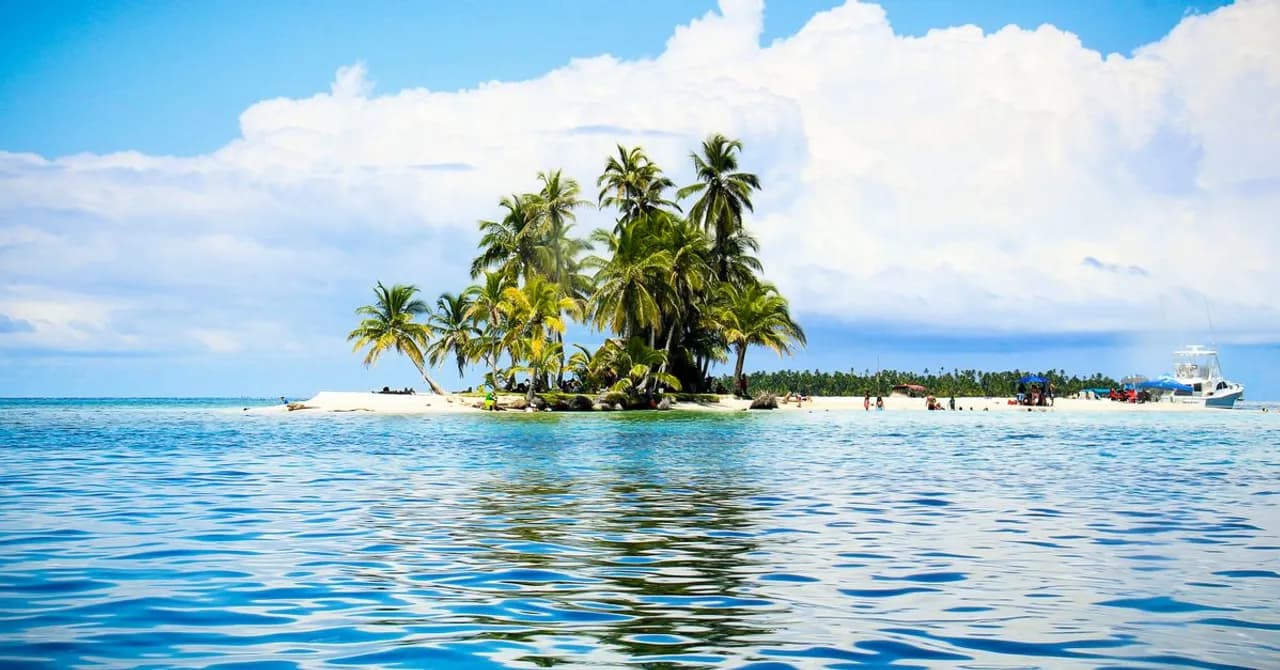
There's no road between Panama and Colombia. Part of the Darién Gap is under a US Do Not Travel advisory renewed 19 August 2026, so you either fly or, for the two-week version, take a multi-day sailboat through Panama's San Blas islands to Cartagena. Budget 5 to 10 GB on one regional eSIM, not a SIM per country.
Contents
- Why there's no road
- Two ways across: sailboat or speedboat
- The route, stop by stop
- Panama City, three nights
- San Blas, five nights among the islands
- Cartagena, back on the grid
- Islas del Rosario, a second archipelago
- One eSIM beats a Panama SIM and a Colombia SIM
- How much data the crossing needs
- Before you sail
Type "Panama to Colombia" into a map and it draws a line through the Darién jungle, as if a road were there. There isn't one, and never has been: this is the only break in the Pan-American Highway across two continents. Every overland traveler ends up choosing between the same two options, fly or go by sea.
Why there's no road
The Darién Gap is roughly 100 kilometers of roadless rainforest straddling the border, and part of it isn't merely undeveloped, it's actively dangerous.
The US Embassy in Panama renewed its Panama travel advisory on 19 August 2026 and kept a Level 4, Do Not Travel rating on specific Darién communities, everywhere south of Jaque, Manene, Yaviza and Lajas Blancas to the Colombian border, plus Lajas Blancas and El Salto themselves. The reason given is blunt: criminal activity and human trafficking networks operate there, and police presence and emergency response are extremely limited.
This isn't the whole Darién region, and it isn't near either crossing route below: the named communities sit deep in the interior, far from Panama City, Guna Yala or the coastal towns this guide covers. It's the reason nobody drives, buses or hikes this border, and why every real route goes around it by water or by air.
Two ways across: sailboat or speedboat
Two real options replace the missing road, and they suit different trips. A multi-day sailboat runs from near Panama City through the San Blas islands to Cartagena directly, with no land border at all. A same-day speedboat instead hops the coast from Puerto Obaldía, Panama, to Capurganá, Colombia, where you clear immigration in person.
| Sailboat via San Blas | Speedboat via Puerto Obaldía | |
|---|---|---|
| Duration | 4 to 5 days, mostly anchored off different cays | One day: a coastal run to Puerto Obaldía, then a 25 to 35 minute crossing |
| Cost | Roughly $550 to $700, all-inclusive | Under $100 door to door, plus onward transport |
| Best for | Travelers who want the islands as the destination | Travelers who just want to cross and move on |
Immigration happens in transit rather than at a normal border post. The sailboat operator handles Panama's exit stamp before departure and Colombia's entry in Cartagena; the speedboat option means walking through Panama's post in Puerto Obaldía and Colombia's in Capurganá, one of the crossing towns Colombia's Foreign Ministry has since equipped with dedicated migration-control posts as Darién-area crossings have grown. Signal on the way follows the same split: little to none for days at a stretch on the sailboat, brief gaps that clear within the hour on the speedboat.
The route, stop by stop
| Stop | Nights | How you get there |
|---|---|---|
| Panama City | 3 | Fly in; this is where you provision the eSIM and book the boat |
| San Blas Islands | 5 | Overland to Cartí or Portobelo, then aboard for the sail to Cartagena |
| Cartagena | 4 | Arrive by sailboat, straight into port |
| Islas del Rosario | 2 | A 40-minute boat from Cartagena's harbor |
Panama City, three nights
Panama City earns three nights here because it's doing double duty: Casco Viejo's colonial core and street food, and the last stretch of reliable, fast connectivity before the islands. It's also where you provision. Book the sailboat a few days ahead; the popular operators fill up fast in the December to April high season.
San Blas, five nights among the islands
Guna Yala is Panama's autonomous comarca, run by the Guna people rather than the national government, and every visitor pays an entry fee at the border into the territory, roughly $20, plus a few dollars per island landing after that. Bring your actual passport; a photo of it isn't accepted.
Expect almost no signal for most of the five nights. Coverage on the cays closest to the mainland is patchy at best, and the outer islands have none at all; +Móvil and Tigo, Panama's two networks since Digicel withdrew from the country, are the only ones that reach even the better-covered spots. Download maps and message anyone expecting to hear from you before you leave Panama City, not from the boat.
Cartagena, back on the grid
Four nights is enough for the walled city, Getsemaní's street art, and one full day doing nothing after five days without a schedule. Coverage here is as good as any Colombian city: Claro, Movistar and Tigo all run dense networks through the historic center and the newer Bocagrande district.
Islas del Rosario, a second archipelago
Islas del Rosario sits about 20 kilometers offshore, a 40-minute boat from Cartagena's harbor, and it's a different kind of island stop: a national park, Corales del Rosario y San Bernardo, rather than an autonomous territory, with day-trippers far outnumbering overnight guests. Coverage is patchy inside the park boundary, better than San Blas but not something to plan a working day around.
One eSIM beats a Panama SIM and a Colombia SIM
Both countries require a passport for a physical prepaid SIM, which turns into the same errand twice on a trip that already involves two border crossings and, if you sail, five days somewhere selling nothing at all. A regional eSIM installs before you fly, needs no shop or queue in either country, and carries the same number through Panama City, the islands and Cartagena.
How much data the crossing needs
Data use here is lopsided: next to nothing during the crossing itself, then a normal city rate in Panama City and Cartagena. Messaging home before you lose signal, maps and rideshare in both capitals, and photos are the main costs.
| What you're doing | Rough data use |
|---|---|
| Panama City or Cartagena, a normal day | 300 to 600 MB |
| Maps and rideshare in either capital | ~50 MB / day |
| Messaging and photo backups before losing signal | ~100 to 200 MB |
| San Blas or Rosario, most days | Little to none, no signal to use it on |
10 GB covers two weeks comfortably for most travelers, since five of the fourteen nights use almost nothing. Go higher only if you're working from Panama City or Cartagena rather than just passing through.
Before you sail
- Install the eSIM in Panama City on Wi-Fi, before you lose signal for good.
- Book the sailboat a few weeks ahead in the December to April high season; the reliable operators sell out.
- Bring your actual passport for the Guna Yala entry fee and both border stamps; a photo doesn't count.
- Carry cash. There's no ATM in San Blas, and none in Puerto Obaldía or Capurganá if you take the speedboat.
- Check the current Panama travel advisory before you book the speedboat route, not after.
- Download offline maps for Panama City, the crossing and Cartagena before you leave.
Continuing past Cartagena? Colombia runs on its own networks the rest of the way south, and our Colombia coverage guide covers Bogotá and the rest of the Caribbean coast, while a wider South America plan is the cheaper choice if Ecuador or Peru come next. Heading back through Panama toward Costa Rica instead? Our Panama coverage guide covers the rest of the country beyond these islands, and Costa Rica needs its own plan too. Unsure which size fits a trip with this much dead time built in? Single-country, regional or global eSIM walks through it, and the offline prep checklist is worth running before the islands specifically. Ready to pick a size?
Is there a road from Panama to Colombia?
No. The Darién Gap is the only break in the Pan-American Highway on either continent, and part of it carries a Level 4, Do Not Travel warning from the US Embassy in Panama as of 19 August 2026. Every route between the two countries goes by air or by sea.
How long does the San Blas sailboat crossing take?
Four to five days from a Panama departure point through the San Blas islands to Cartagena, most of it spent anchored off different cays rather than underway. The final open-water leg, crossing the Golfo de Urabá, is the one stretch some travelers find rough.
Is the speedboat route from Puerto Obaldía safe?
It runs outside the areas the Do Not Travel advisory names, and travelers use it regularly, but it sits close to the Darién region and is worth planning carefully: go with an established operator, cross in daylight, and check the current advisory before you book, not after.
Will my phone have signal in San Blas?
Rarely. Coverage across the Guna Yala archipelago is patchy at best and absent on most cays; only Panama's two networks, +Móvil and Tigo, reach the islands closest to the mainland at all. Download maps and send any messages before you leave Panama City.
Do I need a Panama SIM and a Colombia SIM?
No. Both countries require passport registration to buy a physical prepaid SIM, an errand in each country on top of the crossing itself. A regional eSIM installs before you fly and connects in both without a second registration.
Is it faster to just fly?
Yes, Panama City to Cartagena is a direct flight of about an hour and ten minutes on Copa Airlines. Fly if the islands themselves aren't the point of the trip, and sail if they are.
Popular Panama eSIM plans
Tap a size to see live Panama prices and buy in a couple of taps.
Get a travel eSIM for 200+ destinations in under a minute.
Get your Panama eSIM →

