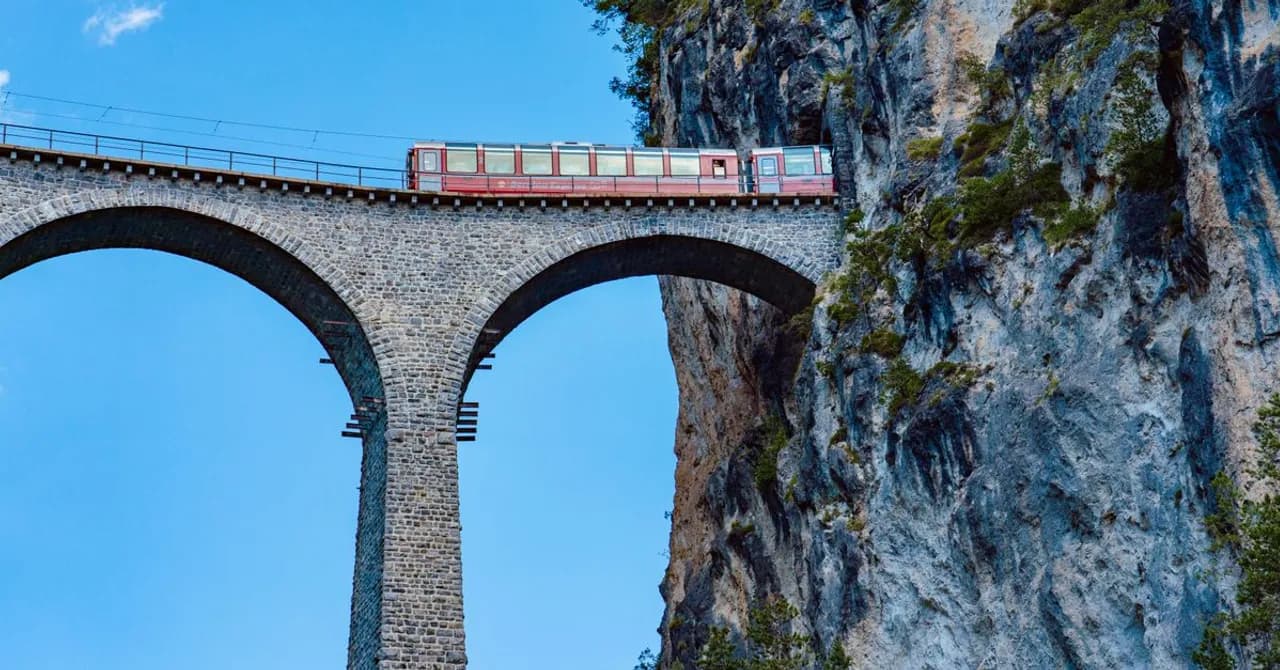
Two weeks up the Mekong: Bangkok to Luang Prabang by train
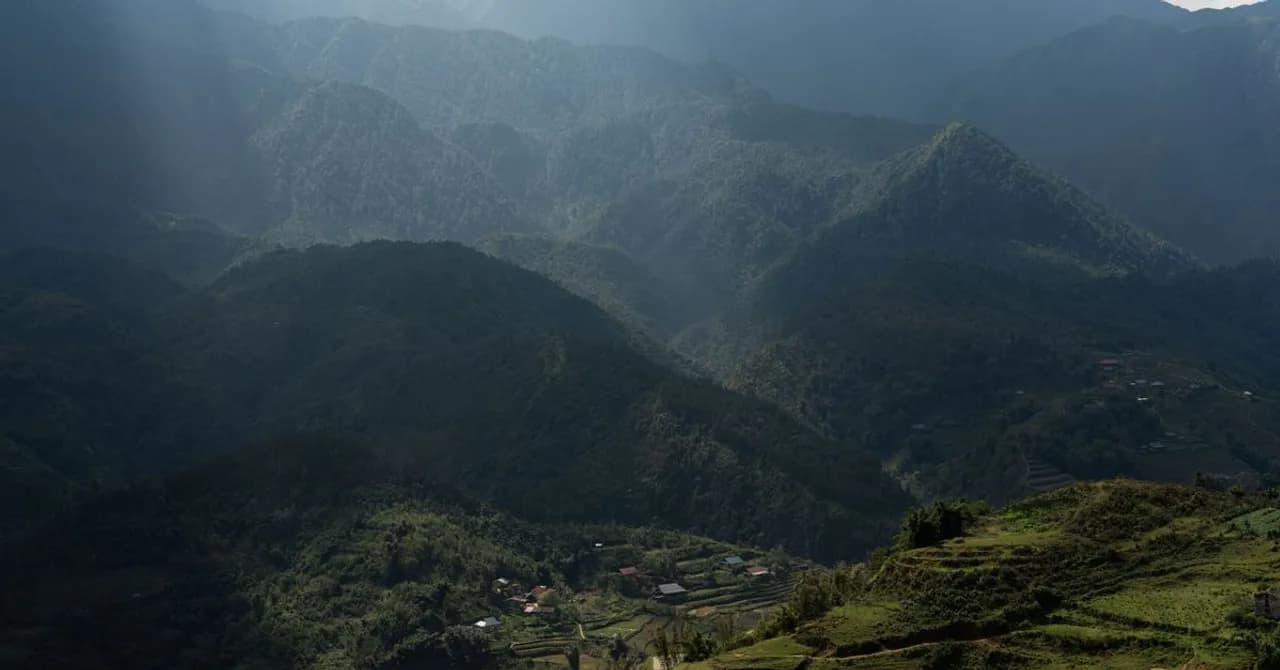
Two countries in fourteen nights, north from Bangkok into the Lao highlands. One overnight train crosses the border, then a two-hour ride on a railway that did not exist five years ago. Budget 500 MB to 1 GB a day on one regional eSIM, because nothing here is covered by a roaming agreement.
Contents
- The route, leg by leg
- Where your phone stops working like home
- Bangkok, four nights
- Bangkok to Vientiane, and the border that moved
- Vientiane, four nights
- Vientiane to Luang Prabang, and the booking trap
- None of these stations are in town
- Luang Prabang, six nights
- The line does not stop here
- How much data two weeks here needs
- Before you go
- Booking and official sources
This corridor is younger than most people's phones. Five years ago Laos had almost no railway at all, and getting from Bangkok to Luang Prabang meant a flight, a very long bus, or a slow boat down the river.
Two things changed that. The Laos-China Railway opened in December 2021 and put a fast line up the spine of the country. Then in 2024 the Thai sleeper was extended across the Mekong into Vientiane itself. The result is a route that most guidebooks still describe wrongly.
The route, leg by leg
Fourteen nights across three bases and two countries. Both legs are trains, which is unusual for this part of the world, and the second one is faster than anything else on this continent outside China and Japan.
| Leg | How | Time | Nights |
|---|---|---|---|
| Bangkok | Arrive by air | - | 4 |
| Bangkok to Vientiane | Overnight sleeper, train 133 | About 11h40 | 4 |
| Vientiane to Luang Prabang | Laos-China Railway, C-series express | About 2h | 6 |
Run it southbound if your flights work better that way. The trains are the same in both directions. What changes is the border: arriving into Thailand is quicker than arriving into Laos, because most nationalities need to buy something at the Lao end.
Where your phone stops working like home
South East Asia has no equivalent of European roaming. There is no agreement here that makes your home plan behave, and there is no regional deal you might qualify for by accident.
That matters more on this route than on most, because you are crossing from one of the region's strictest SIM markets into one of its smallest. Thailand now requires in-person registration with biometric identity checks to activate a prepaid line. Laos is easier, but the shops that matter are in Vientiane, and you will arrive there at nine in the morning wanting to be somewhere else.
There is no roam-like-at-home in South East Asia. Whatever your operator charges to roam in Thailand and Laos is a commercial decision, not a capped one, and the two countries are billed separately.
So the choice is the usual three. Roaming on your home plan works the whole way and can cost more than the trains. Two local SIMs mean two errands on two arrival days. One regional eSIM covers both countries and the border stops being a billing event.
We go into the Thai half in more detail in how much data you need in Thailand, and the southbound version of this trip is Bangkok to Singapore overland.
Bangkok, four nights
Four nights, and the fourth is the one that makes the trip. Bangkok rewards being treated as a city rather than a transit stop: one day for the river and the palace, one for markets, one for a neighbourhood with no sights in it, and one held in reserve.
Practically, this is where your phone earns its keep. Ride-hailing is close to essential, the river boats and the metro use different ticketing, and translation matters more here than it will further north.
Bangkok to Vientiane, and the border that moved
This is the leg that changed, and the reason most itineraries are out of date.
For years the railway stopped at Nong Khai on the Thai bank of the Mekong, and you crossed the river separately. Now a daily sleeper runs the whole way. Train 133 leaves Krung Thep Aphiwat at 21:25 and reaches Vientiane's Khamsavath station at 09:05, which is a little under twelve hours.
The border happens in two halves and neither is on the river. You get off at Nong Khai for Thai exit formalities, then reboard, and Lao immigration is done on arrival in Vientiane. Most nationalities can buy a visa on arrival for about forty US dollars if they have not arranged an e-visa first.
If a guide tells you to take the train to Nong Khai and find your own way across the Friendship Bridge, it predates the 2024 extension. The train goes to Vientiane now.
Book the air-conditioned second class sleeper rather than a seat. The train carries only one sleeping car, so it goes first, and the third class cars are not air-conditioned.
Vientiane, four nights
Vientiane is the quietest capital in South East Asia and that is the whole appeal. It is a low-rise French colonial town on a bend in the Mekong, with a temple count out of proportion to its size and almost no traffic by regional standards.
Four nights sounds like a lot for a city people usually give one. It is not, because two of them are for what surrounds it: the river at sunset, and the day trip out to the Buddha Park.
It is also the practical base. If you are going to sort out anything administrative on this trip, do it here rather than in Luang Prabang, where the shops are smaller and aimed at visitors.
Vientiane to Luang Prabang, and the booking trap
Two hours, and the single most surprising ride in South East Asia.
The Laos-China Railway covers the 239 kilometres in about two hours on the C-series expresses, through mountains that used to take the better part of a day by road. It is a Chinese-built high-speed line running through a country with a population smaller than Bangkok's, and the contrast is the point.
Here is the trap. Booking opens seven days ahead, extended from four days in July 2025. Not two months, the way you would book a European train, and the useful departures go inside that week.
The agents make it tighter still. Third-party booking sites will take your order earlier, but most can only confirm a seat about two days before departure, so until then you are holding a request rather than a ticket.
You cannot plan the Laos leg the way you plan European rail. The booking window is a week, not a season, so treat the train date as fixed and everything else as movable.
That single constraint should shape the whole itinerary. Decide your Luang Prabang dates first, set an alarm for when the window opens, and keep the Vientiane end flexible rather than the other way round.
Vang Vieng sits on the line about an hour up, and it is worth breaking the journey for a night or two if the karst scenery appeals. It is also the one place on this route that has been comprehensively discovered, so go in expecting company.
None of these stations are in town
Four stations on this route, and not one of them is where an older guidebook puts it. Assume a taxi at each end of each leg, and about an hour more than the timetable suggests.
Bangkok's long-distance trains left Hua Lamphong on 19 January 2023. They now leave from Krung Thep Aphiwat, 7 km further north: roughly 25 minutes and 130 baht by taxi from downtown, or 43 baht and the better part of an hour on the MRT Blue Line, changing at Tha Phra.
The sleeper sets you down at Vientiane Khamsavath, about 7 km from the centre. The Laos-China Railway uses a different station entirely, 14 km out on the other side of the city, around 30 minutes and fifteen US dollars by taxi. Bus 28 runs there from the city bus station for 25,000 kip, leaving roughly ninety minutes before each departure.
The two Vientiane stations are not the same place and are nowhere near each other. Arriving on the sleeper does not put you at the Laos-China Railway; that is a separate trip across the city on a separate day.
Luang Prabang's station is 12 km from the old town, about 25 minutes out. Guesthouses will arrange the pickup, and on this one it is worth letting them.
All of which is a data argument as much as a travel one. Every transfer here is a map pin, a ride-hailing fare and a price you would rather not be negotiating at nine in the morning with no signal.
Luang Prabang, six nights
Six nights, and it is the reason the itinerary is shaped this way. Luang Prabang is a UNESCO town at the meeting of two rivers, ringed by mountains, and it is small enough to walk in an afternoon and slow enough to stay a week.
The rhythm is the attraction. Monks collect alms at dawn, the town sleeps through the middle of the day, and the night market fills the main street after dark. Trying to do it in two nights is the most common mistake on this route.
Kuang Si falls is the day trip everyone takes and it earns it. The slow boat up the Mekong to Pak Ou is the one people skip and should not.
The line does not stop here
Luang Prabang is the end of this itinerary and the middle of the railway. The same line carries on north to the Chinese border at Boten and into Yunnan, and a through service runs to Kunming.
That is a different trip and a much bigger set of formalities: a Chinese visa, a different network, and a country where the apps you have been using all fortnight mostly do not work. If you are considering it, treat it as a second holiday rather than an extension, and read up on what a travel eSIM does behind the Great Firewall before you commit.
How much data two weeks here needs
This route is heavier on data than its length suggests, because ride-hailing in Bangkok and constant map use in two countries where street addresses are not how anyone navigates.
| What you are doing | Rough daily use |
|---|---|
| Maps and walking navigation | 150 to 300 MB |
| Ride-hailing, mostly in Bangkok | 100 to 250 MB |
| Messaging and photo sharing | 100 to 250 MB |
| Translation, heaviest in Laos | 50 to 150 MB |
| Booking and checking train times | 50 to 150 MB |
That is 500 MB to 1 GB a day for most people, so 10 GB covers the fortnight. Take 20 GB if you are working from the road.
Coverage is good in both capitals and along the railway, which follows the populated valleys. It thins in the mountains between Vang Vieng and Luang Prabang, and on the river trips out of Luang Prabang you should assume nothing.
Before you go
- Install the eSIM at home on wifi. Doing it at Suvarnabhumi is fine; doing it on a sleeper crossing the Mekong is not.
- Fix your Laos-China Railway date first and build the rest around it. Booking opens seven days ahead and the good departures go quickly.
- Book the air-conditioned second class sleeper on train 133. There is only one sleeping car.
- Have your Lao visa sorted, or the fee ready in US dollars, before you board in Bangkok.
- Budget a taxi at every station. Krung Thep Aphiwat, both Vientiane stations and Luang Prabang are all well outside their city centres.
- Download offline maps for both countries, including the stretch north of Vang Vieng.
- Do any errand that needs a real shop in Vientiane rather than Luang Prabang.
Booking and official sources
- Seat 61's Laos page has the through train times, the border procedure and the Laos-China Railway fares, and is the clearest English account of any of it.
- Seat 61's Thailand page covers the Thai half, including which sleeper berths are worth asking for.
- The Laos-China Railway sells through its own app and through agents; the useful thing to know is the release window rather than the channel, so check a few days out rather than a few months.
Is there really a direct train from Bangkok to Vientiane?
Yes, and it is recent. A daily sleeper runs from Krung Thep Aphiwat to Vientiane's Khamsavath station, leaving at 21:25 and arriving at 09:05. Before the line was extended in 2024 the train stopped at Nong Khai on the Thai bank and you crossed the Mekong separately, which is what most older guides describe.
How does the border work if the train crosses it?
In two halves. You get off at Nong Khai for Thai exit formalities and reboard, then Lao immigration is handled on arrival in Vientiane. Most nationalities can buy a visa on arrival for around forty US dollars if they have not arranged an e-visa in advance.
Which stations does this route actually use?
Out-of-town ones, all four. Bangkok's long-distance trains moved to Krung Thep Aphiwat in January 2023, 7 km north of Hua Lamphong. The sleeper arrives at Vientiane Khamsavath, 7 km from the centre, and the Laos-China Railway leaves from a separate station 14 km out the other side. Luang Prabang's is 12 km from the old town.
How far ahead can I book the Laos-China Railway?
Seven days, extended from four in July 2025, and that is still the single biggest planning constraint on this route. It is not like European rail, where booking months out is normal and cheaper. Third-party agents will take an order earlier, but most can only confirm the seat about two days before departure.
Will one eSIM cover Thailand and Laos?
Yes, on a regional plan rather than two single-country ones. That is the practical argument here: South East Asia has no roam-like-at-home equivalent, so the two countries are billed separately no matter what, unless you carry one plan that covers both.
Can I carry on to China by train?
The rails do. A through service runs from Laos up to Kunming, and the same line passes Luang Prabang on its way to the border at Boten. It is a much bigger undertaking though: a Chinese visa, a different network, and an internet that works differently. Treat it as a separate trip.
Is Vang Vieng worth stopping for?
If karst scenery appeals, yes, and it costs you nothing in transit because it sits on the line about an hour north of Vientiane. Go in knowing it is the most thoroughly discovered place on this route, which is either the appeal or the reason to skip it.
Get a travel eSIM for 200+ destinations in under a minute.
Get your South East Asia eSIM →