Best eSIM for Iceland: coverage from Reykjavík to the Ring Road
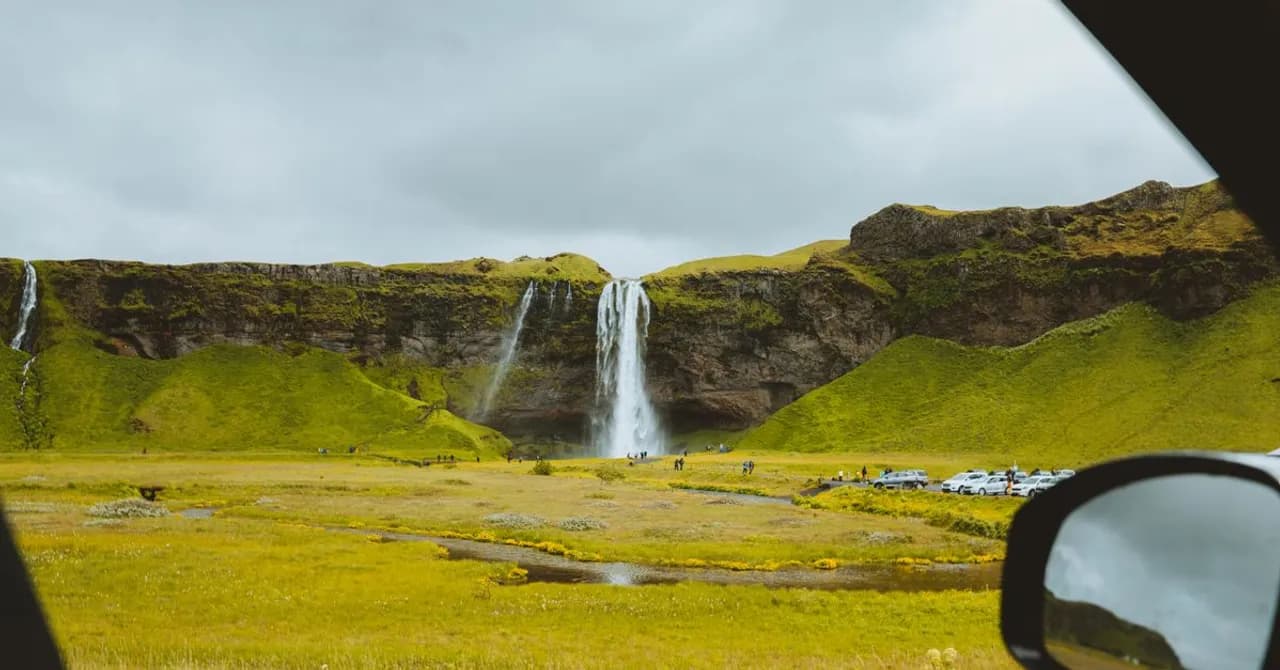
Budget 2 to 3 GB for Reykjavík and the Golden Circle alone, 6 to 9 GB for a one- to two-week Ring Road loop, and 10 GB or more with a highland detour or daily hotspotting. Coverage is fast along the coastal ring and the main towns, and drops out completely in the interior highlands and on F-roads.
Contents
Iceland fits an unusual amount into one island: the geysers and waterfalls of the Golden Circle, the black-sand beaches and glacier lagoons of the South Coast, whale watching out of Húsavík, and a Ring Road that circles the whole country in a loop most visitors drive over one to two weeks. Reykjavík, Akureyri and the towns strung along Route 1 run some of the fastest mobile coverage in Europe. Head into the highland interior on an F-road, though, and the signal usually just stops, not a gap in a provider's map, an absence of towers. Iceland also just became the first country in Europe to fully retire its 2G and 3G networks, which changes what "is my phone compatible" actually means here. Here's a realistic data plan for a Ring Road trip, and what that shutdown means for the phone in your pocket.
Why a travel eSIM is the best option for Iceland
Roam on your home plan, buy a local prepaid SIM at Keflavík, or install a travel eSIM before you go. If your home SIM is issued in the EU or the wider EEA, Iceland is one of the countries covered by the European Commission's Roam Like At Home rules, so your usual data and minutes already work here at your normal domestic rate, no swap needed. Everyone else, UK, US and most Asian travelers included, pays international roaming prices, typically the priciest of the three options by a wide margin. A local SIM from Síminn, Nova or Sýn (trading as Vodafone Iceland) is fair value per gigabyte, but buying one means a stop at the single kiosk in Keflavík's arrivals hall and showing ID to register it, time you'd rather spend getting the rental car sorted before dark. A travel eSIM installs from home over Wi-Fi, keeps your own number live alongside it for calls and texts, and rides the same partner networks a local SIM would use. Weighing it up? See eSIM vs local SIM vs roaming.
Iceland fully switched off its 2G and 3G networks, the first country in Europe to do so, and the shutdown has caught out some older or foreign-purchased phones that support VoLTE and 5G: they enter emergency mode when dialing 112 and fail to connect, even though ordinary calls still work. Icelandic safety authorities are actively warning visitors to check their phone before arrival. Any eSIM-capable phone sold in the last several years handles this fine, it's specifically older or unusual devices worth double-checking.
What actually eats your data in Iceland
Three things dominate an Iceland trip: Google Maps, running almost constantly for Ring Road navigation, GPS on gravel stretches and finding trailheads with no street signs; road and weather checks, since looking up umferðin.is for closures and the forecast before every leg is standard practice here, not optional; and photos and video, because between the Northern Lights (roughly September to April), glacier hikes, waterfalls and the odd puffin colony, most travelers shoot far more than on a typical trip. Maps and weather checks are both light individually, it's the photo and video habit that quietly pushes people over their estimate.
A realistic one- to two-week budget
Most travelers land between 2 GB and 10 GB depending on how much of the island they cover:
- Reykjavík & Golden Circle only (≈2–3 GB): a short city-based trip with day tours, light on data since most evenings are back on hotel or guesthouse Wi-Fi.
- Full Ring Road (≈6–9 GB): a one- to two-week loop with regular Northern Lights, waterfall and glacier-lagoon photo and video sessions.
- Heavy (10 GB+ or unlimited): a highland detour on the F-roads, or you hotspot a laptop from a campervan each evening.
| Activity | Rough data use |
|---|---|
| Maps & Ring Road navigation | ~50 MB / day |
| Messaging + road/weather checks | ~100 MB / day |
| Social scrolling | ~600 MB / hour |
| HD video streaming | ~1.5 GB / hour |
Before you fly, and the moment you land
Install the eSIM at home on Wi-Fi, it doesn't start the clock. Nearly every international flight lands at Keflavík International Airport (KEF), about 45 minutes from Reykjavík by road. Once you're through immigration, set Zwitchy as your data line and switch on Data Roaming for it (that just means "use the eSIM's partner network," never your home carrier), and you'll be online before the rental car shuttle pulls up. The full setup walkthrough covers iPhone and Android. Unsure on size? Start around 5-6 GB for a Ring Road trip and top up in seconds if you run low.
Is your phone eSIM-ready?
Any eSIM-capable phone works on Iceland's networks: iPhone XS / XR or newer, Google Pixel 3 and up, and recent Samsung Galaxy flagships. Two catches, the phone must be carrier-unlocked, and it's worth checking Settings → General → About for an available EID before you rely on it. Because 2G and 3G no longer exist here, a phone this recent is also exactly what avoids the 112 issue above. Because the eSIM runs alongside your physical SIM, most travelers leave their home line in for calls and texts and simply select Zwitchy for mobile data.
Where the signal is strong, and where it drops
Coverage rides three networks, Síminn, Nova and Sýn (Vodafone Iceland), all running 4G along virtually the whole Ring Road and through every town it passes, with 5G concentrated in Reykjavík, the Keflavík area and Akureyri. Síminn generally reaches furthest into the smaller towns and fishing villages the Ring Road strings together. For Maps, weather checks and photos, that coverage is plenty almost everywhere most visitors actually go.
The gaps are real, though, and they're deliberate rather than a network problem. The Westfjords see far fewer towers than the rest of the country and lose signal between the small towns; the interior highlands, the F-roads through Kjölur, Sprengisandur and Landmannalaugar, and the glacier crossings have close to none at all. Iceland's own road authority runs umferðin.is precisely because those routes only open in summer and can close again on short notice, check it before any highland leg, alongside offline maps downloaded while you've still got signal.
Combining Iceland with a European stopover, common on Icelandair's free-stopover routes, or continuing on to the mainland? A Europe regional plan covers both legs from one install if your itinerary adds a second country, and our Eurotrip guide walks through when that's worth it over separate single-country plans. Ready to pick a size?
Which network will my eSIM use in Iceland?
One of the country's partner networks, Síminn, Nova or Sýn (Vodafone Iceland), the same towers a local SIM would use. Your phone attaches to whichever is strongest automatically, there's nothing to select manually.
Will my eSIM work in the Westfjords or on the highland F-roads?
Wherever there's a signal, yes, on the same networks a local SIM would reach. The Westfjords have patchy coverage between towns, and the interior highlands have close to none at all, that's terrain and tower placement, not a plan limitation. Check umferðin.is before any highland leg and download offline maps first.
How much data do I need for a 7 to 10 day Ring Road trip?
Budget 6 to 9 GB: a couple of gigabytes for Maps and road and weather checks, the rest for the Northern Lights, waterfall and glacier-lagoon photo and video most travelers shoot along the way.
My phone is a few years old. Will it still work now that Iceland has shut down 2G and 3G?
Almost certainly, if it's from the last several years and eSIM-capable, but it's worth checking. Iceland's shutdown has caught out some older or foreign-purchased phones that fail to connect an emergency 112 call despite otherwise working normally, so check your phone before you fly.
I already have an EU or EEA phone plan. Do I still need a travel eSIM for Iceland?
Not necessarily. Iceland is covered by the EU's Roam Like At Home rules, so an EU or EEA SIM already works here at your normal domestic rate. A travel eSIM mainly helps travelers from outside the EU/EEA, or anyone who'd rather not eat into their home data allowance.
Do I need to show ID or a passport to get connected in Iceland?
Only for a local SIM bought in person, which typically means registering it with ID at the counter. A travel eSIM installs and activates from home with nothing more than an email address for delivery.
Popular Iceland eSIM plans
Tap a size to see live Iceland prices and buy in a couple of taps.
Get a travel eSIM for 200+ destinations in under a minute.
Get your Iceland eSIM →

